Kazi Nazrul Islam: The Rebel Poet of Bengal and National Poet of Bangladesh
Every Bangladeshi kid in the diaspora meets Kazi Nazrul Islam before they can read him. He is the voice coming out of the TV the night the Eid moon is sighted. He is the song your nani hums while folding laundry, and the poem some cousin recites, fist raised, at the Bangla school program in a rented church basement. Kazi Nazrul Islam is the national poet of Bangladesh, the Bidrohi Kobi (rebel poet) of Bengal, and one of the most loved writers in the Bangla language on both sides of the border.
This guide is for the second-gen reader who knows the name and the face but not the story. Who he was, why he went to jail, why his songs belong to Muslims and Hindus alike, how one man can be the pride of two countries, and which five works to start with this week.
Who was Kazi Nazrul Islam?
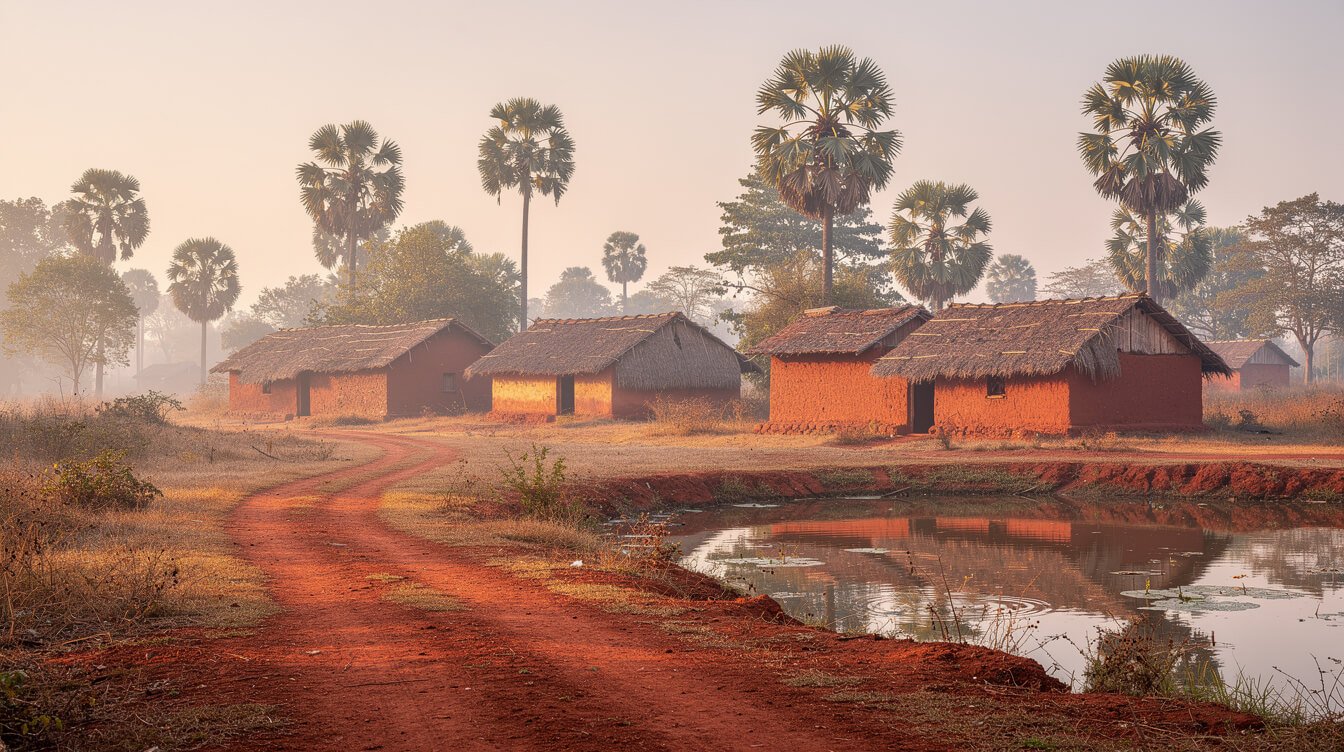
Kazi Nazrul Islam was born on 24 May 1899, which is 11 Jaishtha 1306 on the Bangla calendar, in the village of Churulia in Burdwan, in what is now West Bengal, India. His father, Kazi Fakir Ahmed, was the imam of the local mosque and the caretaker of a shrine. When his father died in 1908, the boy, barely nine, took over the caretaker’s job and also served as the mosque’s muezzin (the one who gives the call to prayer) to help feed the family.
Money was always short, and school kept slipping away from him. He joined a leto group, a traveling folk-theater troupe, where he acted and learned to write songs and verse on the spot. Later he worked as a cook and at a tea stall in Asansol. That run of hard years gave him the nickname that stuck for life: Dukhu Mia, built on dukkho, sorrow. A police inspector who noticed the bright kid at the tea stall helped get him back into school, and in 1914 he studied at Darirampur School in Trishal, Mymensingh, in present-day Bangladesh.
Toward the end of 1917 he joined the army and was posted to Karachi with the 49th Bengal Regiment, where he rose to battalion quartermaster. The army years were also his writing apprenticeship. He learned Persian from the regiment’s moulvi, read Tagore, Sarat Chandra and Hafiz, and sent his first stories and poems to Kolkata journals. By 1920 he was back in Kolkata, rooming at 32 College Street and holding court at the literary addas of the city, the long talking sessions Bengalis still treat as sacred.
Everything about his life after that moved fast and loud. His working years as a writer lasted only about two decades. In 1942, at 43, he fell ill and gradually lost his speech and memory, and he spent his last 34 years in silence. Most of what we sing today was written in that short, furious window between 1920 and 1942.
Why Kazi Nazrul Islam is called the rebel poet

In December 1921, in a rented room on Taltala Lane in Kolkata, Nazrul wrote a poem called Bidrohi, “The Rebel.” It was first printed on 6 January 1922 in the weekly Bijli (“Lightning”), and it hit Bengal like its name. The poem opens with the words “Bolo bir”, “speak, O hero,” and keeps going for 139 lines of “I am” declarations, pulling in images from Hindu, Islamic and Greek mythology at the same time. Nobody in Bangla poetry had written like that. In October 1922 it was collected in Agni-Veena (“Lyre of Fire”), his first book of poems, and the first edition sold out fast.
He did not stop at poems. On 12 August 1922 he launched a magazine called Dhumketu, “Comet,” which attacked British rule outright. Rabindranath Tagore sent a blessing for its masthead that began, in Banglapedia’s translation, “Come O comet come. Blaze in darkness the bridge of fire.” After Dhumketu printed his poem “Anandamayir Agamane,” about the arrival of the goddess Durga and read as a veiled political call, the colonial government seized the issue. Nazrul was arrested in late 1922, and in January 1923 he was sentenced to a year of rigorous imprisonment for sedition.
His statement to the court, Rajbandir Jabanbandi (“A Political Prisoner’s Deposition”), is still read as literature. In jail he wrote songs, and in Hooghly Jail in April 1923 he began a hunger strike against the treatment of prisoners that lasted 40 days. Tagore, who had just dedicated his musical play Basanta to the jailed young poet, sent a telegram: “Give up hunger-strike, our literature claims you.” It was never delivered. Nazrul was released in December 1923, and the British went on to ban several more of his books.
That is the whole meaning of Bidrohi Kobi. As বাংলাপিডিয়া puts it, he was called the rebel poet “for his brave resistance to all forms of repression”: colonial rule, yes, but also caste, communal hatred, and anyone who used religion to divide people. If you want to wear that spirit, the কাজী নজরুল ইসলাম বিদ্রোহী কবি ভিন্টেজ টি-শার্ট puts his portrait in black and white, arms crossed, looking exactly like a man who would write back to an empire.
Nazrul Geeti: the songs your nani already knows
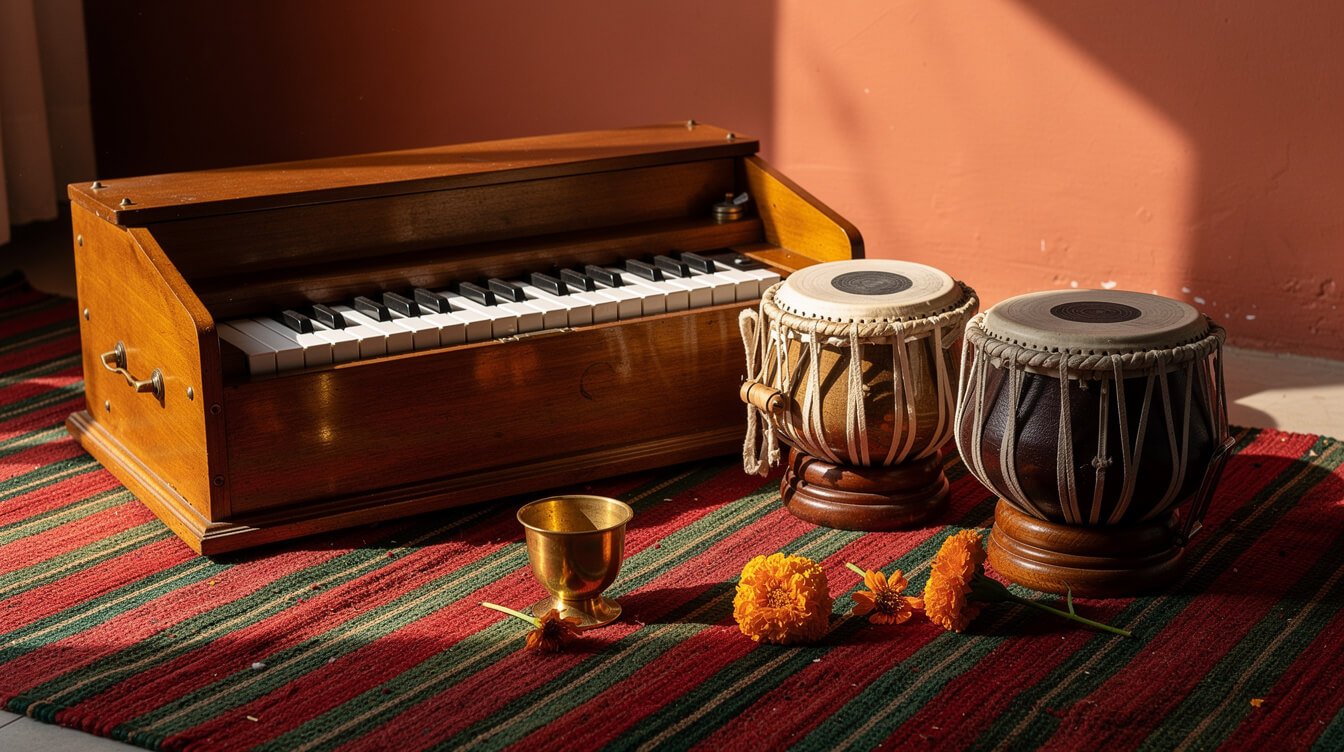
Here is the thing most people outside Bengal miss: Nazrul is as much a composer as a poet. His songs, written and set to music by him, are called নজরুল গীতি অথবা Nazrul Sangeet, and they are a whole genre of their own, the way রবীন্দ্র সঙ্গীত is Tagore’s. If an auntie at a dawat sits down at the harmonium, there is a good chance the first song is one of his.
Nobody knows exactly how many he wrote. বাংলাপিডিয়া speaks of “two thousand odd songs.” Researchers have the complete text of about 2,260 and the first lines of 2,872, and some of his contemporaries put the total near 4,000. Whatever the number, it is enormous for a working life of about 20 years.
What makes a song a Nazrul song
Nazrul took the folk songs he grew up with and sat them on the foundation of north Indian classical music. In 1930 he sorted the songs in his book Nazrul-Gitika himself, and the list reads like a map of Bengal’s music: ghazal, kirtan, বাউল, bhatiyali (the river boatmen’s songs), dhrupad, kheyal, patriotic songs and comic songs. He even invented new ragas.
- The Bengali ghazal. Others had tried it, but the Bangla ghazal, the love song built on the Persian and Urdu form, is mainly Nazrul’s creation. He began writing them around 1926 in Krishnanagar.
- The records. His Master’s Voice (HMV) released the first gramophone record of his songs in 1925. By 1950, record companies had issued over a thousand Nazrul records.
- The radio. From 1939 he directed music programs on Kolkata radio, including raga-based series that many consider the high point of his musical life.
That is why your nani knows the songs even if she never read a line of his poetry. For three generations, Nazrul came into Bengali homes through the speaker, not the bookshelf.
A poet for every faith

If one thing makes Nazrul feel modern, it is this. The son of a mosque imam wrote some of the best-loved Islamic songs in Bangla, and he also wrote Hindu devotional songs that are still sung today. According to Banglapedia, starting around 1930 he composed nearly a thousand devotional songs: Shyama Sangeet (hymns to the goddess Kali), bhajans and kirtans from Hindu tradition, and hamd, naat এবং marsiya from Islamic tradition.
He lived it at home, too. In April 1924 he married Pramila Devi, a young Hindu woman from a Brahmo family he had met in Comilla (Cumilla) in 1921. Their sons carried names from both worlds: Krishna Mohammad, Arindam Khaled (called Bulbul), Sabyasachi and Aniruddha. He drew on Persian archetypes as easily as on the Puranas, and used Arabic and Sanskrit meters side by side.
Not everyone loved it. Conservatives on both sides attacked him, some for his marriage, some because a Muslim was writing hymns to Hindu goddesses. Nazrul answered with songs. In Berhampore Jail he wrote “Jater name bajjati,” which Banglapedia translates as “The communal cheats are gambling in the name of communities.” A century later, that line still lands.
This is a big part of why Bangladeshis of every background claim him. Muslim, Hindu, Buddhist and Christian Bangladeshis all grew up on the same Nazrul songs, and the wider Bangladeshi culture he helped shape has room for all of them.
বাড়ি থেকে চিঠি
আপনার ইনবক্সে আরও একটু দেশি খাবার।
সপ্তাহে একটি সংক্ষিপ্ত ইমেল: কোনো প্রতীক, উৎসব বা খাবারের পেছনের গল্প, সাথে দোকানের নতুন ডিজাইন। কোনো স্প্যাম নেই। যেকোনো সময় আনসাবস্ক্রাইব করুন।
Indian or Bangladeshi? One poet, two Bengals

It is one of the most-searched questions about him, and the honest answer is: both. Nazrul was born in 1899 in British-ruled Bengal, in a village that is now in West Bengal, India. He made his career in Kolkata. But his life ran across the whole of Bengal long before any border existed. He went to school in Trishal in Mymensingh, met his wife in Comilla, visited Dhaka for literary conferences in 1927 and 1928, and stayed in Chittagong (Chattogram) in 1929.
India honors him. The University of Calcutta gave him its Jagattarini Gold Medal in 1945, India awarded him the Padma Bhushan in 1960, and the West Bengal government opened Nazrul Tirtha, a cultural center in his memory in Rajarhat near Kolkata.
Bangladesh made him its own. On 24 May 1972, his 73rd birthday, the poet and his family were brought from Kolkata to Dhaka with the consent of the Government of India, and Bangladesh honors him as its national poet. Dhaka University gave him an honorary doctorate in 1974, and in 1976 he received Bangladeshi citizenship and the Ekushey Padak. He died in Dhaka on 29 August 1976 and was buried on the Dhaka University campus, beside the university mosque. His song “Chol Chol Chol” is the national march of Bangladesh.
So when your American friend asks whether he is Indian or Bangladeshi, the best answer is the one that fits Bengal itself: he belongs to the Bangla language, and the বাঙালি মানুষ on both sides of the border have never stopped singing him.

Wear the Bidrohi Kobi
A vintage black-and-white portrait of Kazi Nazrul Islam, arms crossed, on a black heather tee. For the cousin who recites “Bidrohi” at every program, and everyone who grew up on Nazrul Geeti.
Where to start: five Kazi Nazrul Islam poems and songs

You do not need to read 3,000 songs. Start with these five, look up a recording, and ask an elder which one they learned first. You will get a story.
- “Bidrohi” (“The Rebel”), 1922. The poem that made him. Listen to a recitation before you try to read it; it is built to be shouted. If you have a cousin who did Bangla school, they probably memorized at least the opening.
- “Karar Oi Louho Kopat” (“Those Iron Gates of Prison”). A protest song written after the arrest of the freedom fighter Chittaranjan Das in 1921. Britannica notes it is still widely sung in both Bangladesh and West Bengal.
- “Chol Chol Chol” (“March, March, March”), 1928. First published as “Notuner Gaan” (“Song of the Young”), with words and tune by Nazrul. In January 1972 Bangladesh adopted it as its national march.
- “O Mon Romjaner Oi Rojar Sheshe Elo Khushir Eid” (“O my heart, after the Ramadan fast, joyful Eid has come”), 1931. The Eid song. As দ্য ডেইলি স্টার tells it, his student, the singer Abbasuddin Ahmed, asked him for a song Bengali Muslims could call their own. Abbasuddin recorded it, and it came out in February 1932, days before Eid. In Bangladesh, Eid does not feel official until this plays on TV.
- “Bagichay Bulbuli Tui” (“The bulbul in the flower garden”). One of his best-known ghazals, set in raga Bhairavi. Pick it when you want the soft, romantic Nazrul instead of the fiery one.
If you can, find a recording by the great Nazrul singers; Banglapedia credits Dilip Kumar Roy with taking his ghazals to wide audiences. Then read the poems in a good published English translation. Avoid random “translated quotes” on social media. Some of them are not his.
Nazrul Jayanti and Nazrul in the diaspora
Nazrul’s birthday, Nazrul Jayanti, is marked on 11 Jaishtha. On the revised Bangla calendar Bangladesh uses, where Pohela Boishakh is fixed on April 14, 11 Jaishtha always lands on May 25. That is why you will see both May 24 (his birth date on the Western calendar) and May 25 (the day he is celebrated) online. Both are right, for different reasons.
Outside Bangladesh, the day often merges with Tagore’s birthday into a joint Rabindra-Nazrul Jayanti evening: kids in panjabis and saris, a harmonium on a folding table, one very long recitation, and a tray of shingara nobody made enough of. Bengali communities from Seoul to Brussels have held them. In the US, the Nazrul Endowment funds research on his life and work at California State University, Northridge. And the language you speak at those programs, the one he stretched to fit Persian, Arabic and Sanskrit words, is the same বাংলা your parents want you to keep.
For the cousin who cries a little at the ghazals, the কাজী নজরুল ইসলাম বিরহো বিধুর হৃদি is the softer, moodier Nazrul: a monochrome portrait among dark leaves, made for cold evenings and long playlists.
The easiest way to keep Nazrul alive in your house is simple. Put on a Nazrul Geeti playlist on a Sunday morning while the cha is brewing. Ask your nani which song she sang at school. Let your kids hear “Chol Chol Chol” before they learn what it means. That is how he reached us, too.
Kazi Nazrul Islam FAQ
Who is the national poet of Bangladesh?
Kazi Nazrul Islam (1899 to 1976). Bangladesh brought him to Dhaka in 1972 and honors him as its national poet. Rabindranath Tagore wrote Bangladesh’s national anthem, “Amar Shonar Bangla,” but Nazrul is the national poet.
When was Kazi Nazrul Islam born and when did he die?
He was born on 24 May 1899 (11 Jaishtha 1306) in Churulia, Burdwan, and died on 29 August 1976 in Dhaka.
Why is he called Dukhu Mia?
It was a childhood nickname from dukkho, sorrow, earned during the years when he lost his father, left school and worked odd jobs to support his family.
What is Kazi Nazrul Islam’s most famous poem?
“Bidrohi” (“The Rebel”), written in December 1921 and published in January 1922. It is why he is called the rebel poet.
Where is Kazi Nazrul Islam buried?
On the Dhaka University campus, on the north side of the university mosque, where he was buried with state honors in 1976.
How many songs did Nazrul write?
The exact number is unknown. Banglapedia says about two thousand; the complete text of about 2,260 survives, and some contemporaries put the total near 4,000.
যাওয়ার আগে
পরবর্তী খবরটি ইমেইলে পান।
আমরা প্রতিদিন বাংলাদেশি ঐতিহ্য ও প্রবাসী জীবন নিয়ে লিখি। এর সেরা লেখাগুলো একটি সংক্ষিপ্ত সাপ্তাহিক ইমেইলে প্রকাশিত হয়।