Panch Phoron: The Bengali Five-Spice Blend, Explained by Someone Who Grew Up With It
Every Bangladeshi kid raised abroad knows the sound before they know the word. Oil goes into the korai (the deep, round wok), the kitchen goes quiet for a second, and then a spoonful of tiny seeds hits it and crackles like a small round of applause. That spoonful is very often panch phoron, the Bengali five-spice blend, and it is the reason your Ammu’s dal smells like home and the dal you make from a cookbook does not.
This guide explains panch phoron properly: what the name means, the five seeds inside it, the “radhuni question” that splits Bengali kitchens, how the phoron (tempering) actually works, the dishes Bangladeshi families use it in, and how to buy or make it when the nearest bazar is a desi grocery two bus rides away.
What is panch phoron?
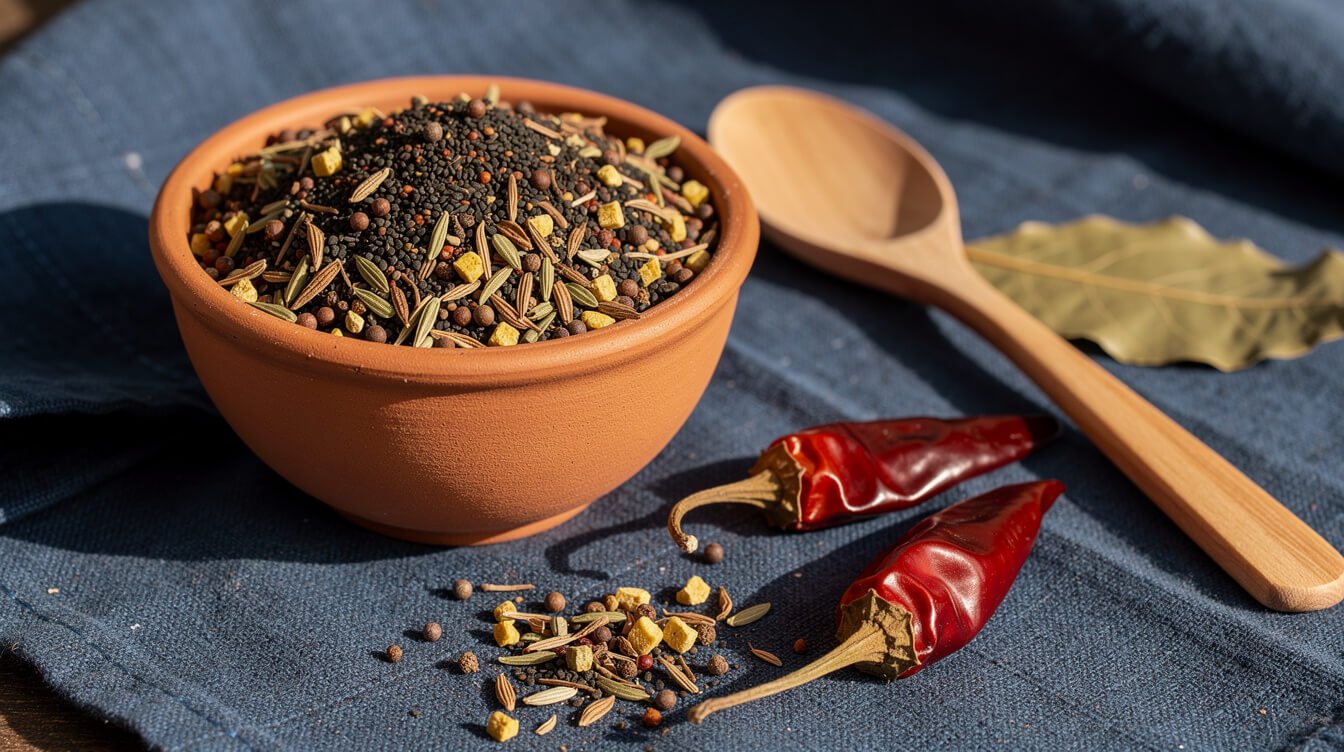
Panch phoron (in Bangla, পাঁচ ফোড়ন) is a blend of five whole seeds used to temper food at the start or end of cooking. Panch means five. Phoron is the tempering itself: the whole spices you fry in hot oil so they release their flavor into everything that follows. So the name is less “five-spice powder” and more “the five-seed sizzle”.
The blend belongs to the whole eastern side of the subcontinent. It is a core seasoning in Bangladesh and West Bengal, and versions of it show up in Odisha (where it is called pancha phutana), in the Bhojpuri kitchens of Bihar (panch phoran), in Mithila, in Assam, and in Nepal. That is the honest One Bengal version of the story: nobody owns this blend, and every region that uses it swears its version is the right one.
The checkable fact: all five ingredients are seeds, and unlike most South Asian spice mixes, it is used whole, not ground. If you open a packet and see powder, it is not panch phoron.
The five seeds in panch phoron (and the radhuni question)
The standard blend is five seeds, usually in equal parts. Here is what is in the packet, with the names you will hear in a Bangladeshi kitchen:
- Methi (fenugreek seed). Small, hard, golden-yellow, and angular. It is the bitter one, which is why some cooks use a little less of it than the others.
- Kalo jira (nigella seed). Tiny, matte, jet black, and sharp-edged. In English shops it is sold as nigella or kalonji. The name means “black cumin”, but it is a different plant from cumin.
- Jira (cumin seed). Thin, ridged, and grey-brown. The most familiar smell of the five.
- Shorshe (mustard seed). Tiny and round, usually the dark reddish-black kind. They pop loudly in hot oil, so they do a lot of the crackling.
- Mouri (fennel seed). Plump, pale green, and sweet. Mouri is also the after-meal seed many families chew to freshen up.
The radhuni question
Here is where Bengali kitchens disagree in the friendliest possible way. Some households swap one of the five for radhuni, a small seed often sold in English as “wild celery”. It is a very strong spice, with a smell close to parsley and a taste close to celery, and a couple of pinches can take over a whole pot. Radhuni is used across Bengali cooking in both Bangladesh and West Bengal, most famously in shukto, the bitter vegetable starter.
Which seed radhuni replaces depends on who you ask. Wikipedia’s entries on both panch phoron and radhuni say it stands in for the mustard seed. The popular Kolkata cooking channel Bong Eats builds its blend with radhuni in place of the cumin instead, and says cumin is an acceptable substitute if you cannot find radhuni. So if your Nani’s tin smells a little more like celery than yours does, neither of you is wrong. You just grew up on different sides of the radhuni debate.
Phoron: the crackle that starts a Bangladeshi dish
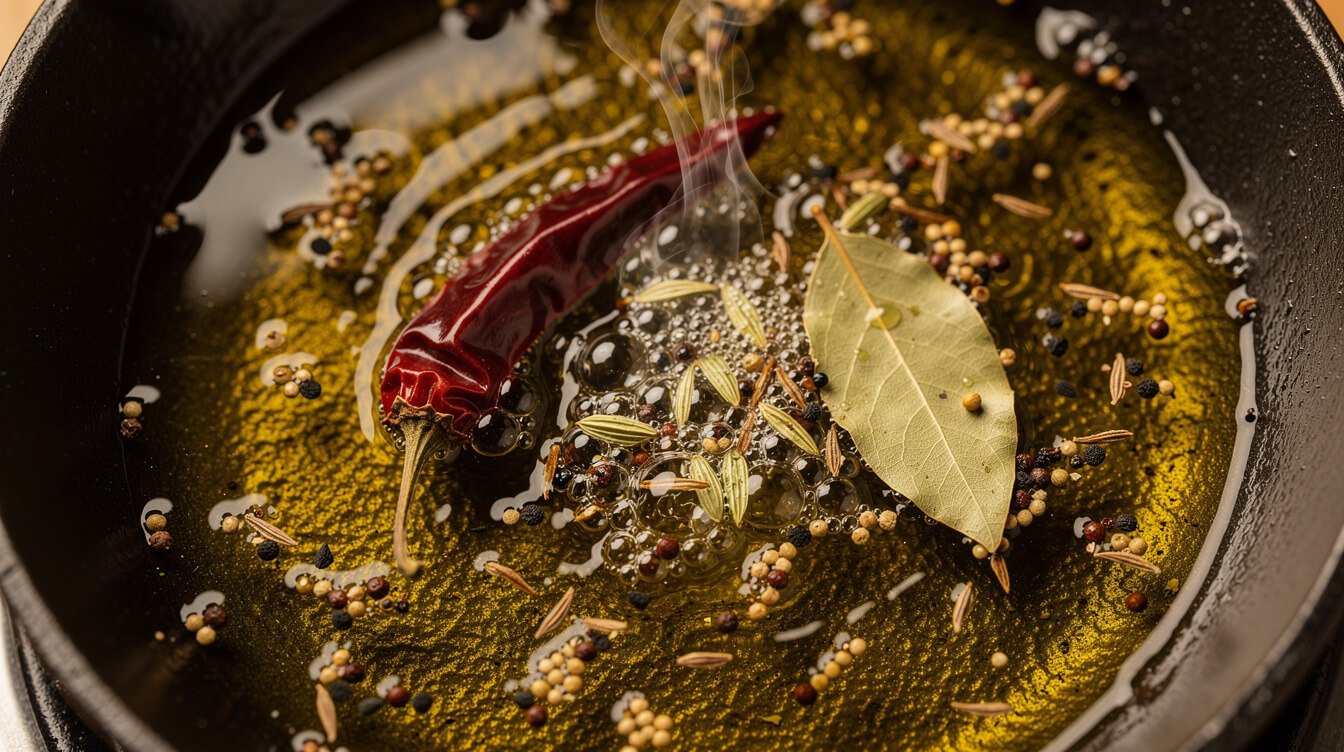
To understand the blend, you have to understand phoron, the technique. Cooks across the subcontinent call it tempering, tadka, or baghar. The idea is simple: whole spices are cooked briefly in hot oil or ghee to release their essential oils, and then that flavored oil carries the taste through the whole dish. Wikipedia’s entry on tempering traces phoran, the Bhojpuri form of the word, back to a Sanskrit root meaning “crackling”. Anyone who has stood next to the stove knows that is exactly right.
How it goes in a Bangladeshi kitchen
- Heat the oil. For many Bengali dishes that means mustard oil, heated until it smokes and turns paler, which takes the raw edge off. (Yes, this is the step that sets off the smoke alarm in American apartments. Open a window, then blame the building.)
- Lower the heat and add the phoron. It usually goes in with one or two dried red chillies, and often a bay leaf (tej pata).
- Listen. The seeds sputter and pop within seconds. Bong Eats tempers its labra on low heat for about 30 seconds and warns that if the phoron burns, it turns bitter. Fenugreek is the usual culprit.
- Add the next thing fast. Ginger paste, onions, vegetables, or the boiled dal goes straight in and stops the seeds from scorching.
Phoron does not only happen at the start. Tempering can also be done at the end, as a finishing pour of hot spiced oil over a finished dish. A 2012 Daily Star column on Baishakh bitter dishes describes exactly that for neem-jhol: neem leaves are fried crisp in ghee with the five seeds, and the whole sizzling spoonful is poured over the cooked vegetables just before serving.
Why panch phoron is used whole
Ground spice mixes like garam masala are about blending flavors into a smooth background. The five-seed blend works differently. Each seed stays whole, so each one keeps its own personality, and you taste them one at a time: a sweet hit of fennel here, a bitter flicker of fenugreek there, the onion-and-pepper note of nigella, the warm cumin, and the little sharp pop of mustard. Bengali cooks like that unevenness. It is the reason a spoonful of tomato chutney tempered this way tastes different with every bite.
Whole seeds also behave better in hot oil. They can take the heat for the few seconds a phoron needs, while a ground powder would burn almost instantly. That is why reference sources describe it as “always used whole”.
There is one honest exception. A few modern recipes dry-roast the seeds and grind them, then sprinkle it in as a powder. A greens recipe in The Business Standard, for example, calls for “panch phoron powder”. That is a variation, though, not the default. If a recipe just says “panch phoron”, it means the whole seeds.
What it tastes like
The blend is not hot. There is no chilli in it at all, so any heat in a dish comes from the dried red chillies that go into the oil alongside it. On its own, fried in oil, it smells nutty, slightly sweet, a little bitter, and very savory. On vegetables and dal it reads as “homemade” in a way that is hard to put into words. That is not a mystery ingredient. It is simply five seeds doing their job.
Letters from home
A little more desh in your inbox
One short email a week: the story behind a symbol, a festival, or a dish, plus new designs from the shop. No spam. Unsubscribe anytime.
Bangladeshi dishes that use panch phoron
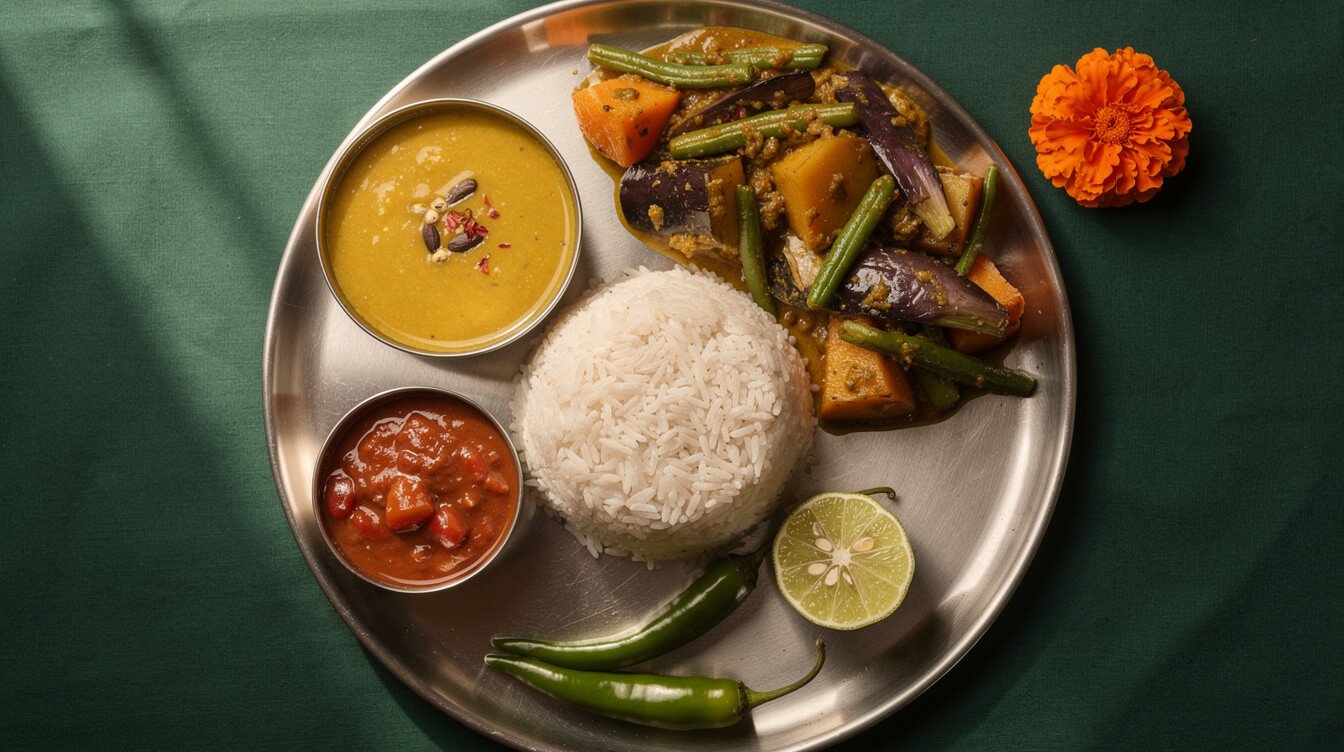
This is a vegetable, dal, chutney, and pickle spice. You will rarely find it in a biryani or a rich meat curry, which live in the world of cardamom, cinnamon, and cloves. Here is where it really shows up:
- Dal. The everyday use. A thin mosur dal (red lentils) gets a phoron of the five seeds and a dried chilli, either at the start or poured over at the end. The Business Standard’s Noboborsho feast menu tempers its aamer tok dal, a sour green-mango dal, with panch phoron (or plain black mustard seeds) and a dry red chilli in mustard oil.
- Labra. A big mixed-vegetable dish of pumpkin, eggplant, potato, beans, raw banana, and more, best known as part of the bhog (offering meal) at Durga Puja. Bong Eats tempers its labra with dried red chillies and panch phoron.
- Tomato chutney. The sweet, sour, sticky chutney that closes a festive Bengali meal is often tempered the same way. Some versions add dates or raisins.
- Alu bhaja and simple potatoes. The Daily Star’s Durga Puja menu fries diced potatoes in ghee tempered with green chillies and half a teaspoon of panch phoron.
- Bitter dishes. The Baishakh teeta (bitter) lunch tradition in rural Bangladesh includes neem leaves and bitter gourd, and as above, the five seeds can be the finishing phoron. Shukto, the most famous bitter starter, leans on radhuni, and some versions use fenugreek seeds to keep the bitterness.
- Achar (pickles). Pickles are one of the blend’s classic uses, and many mango achar recipes fry it in mustard oil first. It is part of why a jar of Nani’s achar smells the way it does.
The common thread is a simple everyday plate: rice, dal, one or two vegetables, and something sour or sweet on the side. If that is your idea of comfort, you are not alone, and our Bhaat Is My Comfort Food Bangladeshi Rice T-Shirt says it for you. If you want to go deeper on what a Bangladeshi meal looks like, start with our insider’s guide to Bangladeshi food, and for the rainy-day one-pot cousin of dal and rice, read our guide to khichuri.

Rice, dal, and a good phoron
For everyone whose favorite meal is a plate of bhaat with dal and whatever Ammu tempered that day. The Bhaat Is My Comfort Food tee is a vintage-style design for people raised on rice.
Panch phoron vs garam masala vs Chinese five-spice
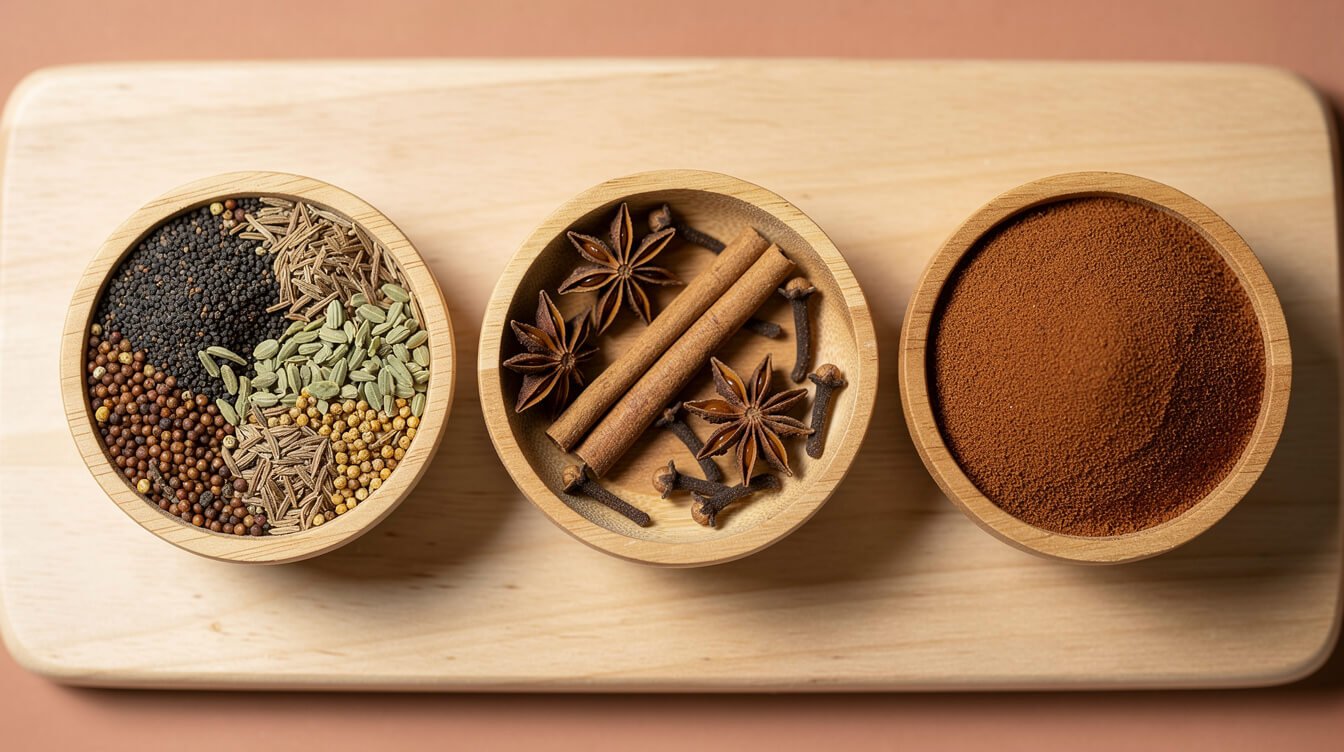
Spice shops and recipe sites mix these three up all the time, especially the two “five-spice” blends. They have almost nothing in common.
| Panch phoron | Garam masala | Chinese five-spice | |
|---|---|---|---|
| Form | Whole seeds | Usually ground | Ground powder |
| Typical spices | Fenugreek, nigella, cumin, mustard (or radhuni), fennel | Varies by region and family: cardamom, cinnamon, cloves, peppercorns, cumin, bay leaf, and more | Star anise, cloves, Chinese cinnamon, Sichuan pepper, fennel |
| How it is used | Fried in hot oil as a phoron, at the start or as a finishing pour | Roasted, ground, and often added near the end of cooking | Rubbed onto or stirred into meats and sauces |
| Flavor | Nutty, slightly bitter, sweet, savory, no heat | Warm and aromatic | Sweet, licorice-like, numbing from Sichuan pepper |
| Home kitchens | Bangladesh, West Bengal, Odisha, Bihar, Assam, Nepal | Across South Asia, including Bangladesh | Chinese cooking |
The only ingredient the two “five-spice” blends share is fennel. Swap one for the other and your dal will taste like roast duck. Keep them on separate shelves.
Garam masala is not a rival, either. Plenty of Bangladeshi kitchens use both, just for different dishes. The kacchi biryani at a wedding lives in the warm, ground-spice world. The weekday dal and torkari (vegetable curry) live in the whole-seed, panch phoron world.
How to make, store, and buy panch phoron abroad
Making it at home
This is the easiest recipe on this site. Most cooks mix the five seeds in equal parts, for example one tablespoon each of methi, kalo jira, jira, shorshe, and mouri. Stir them together and you are done. No roasting, no grinding.
Two adjustments are common. If you find the blend too bitter, use a little less methi (fenugreek). If you can get radhuni at your grocery and want the flavor some families grew up with, swap it in for the mustard or the cumin, depending on which side of the debate your family is on. Add it carefully, because radhuni is strong.
Storing it
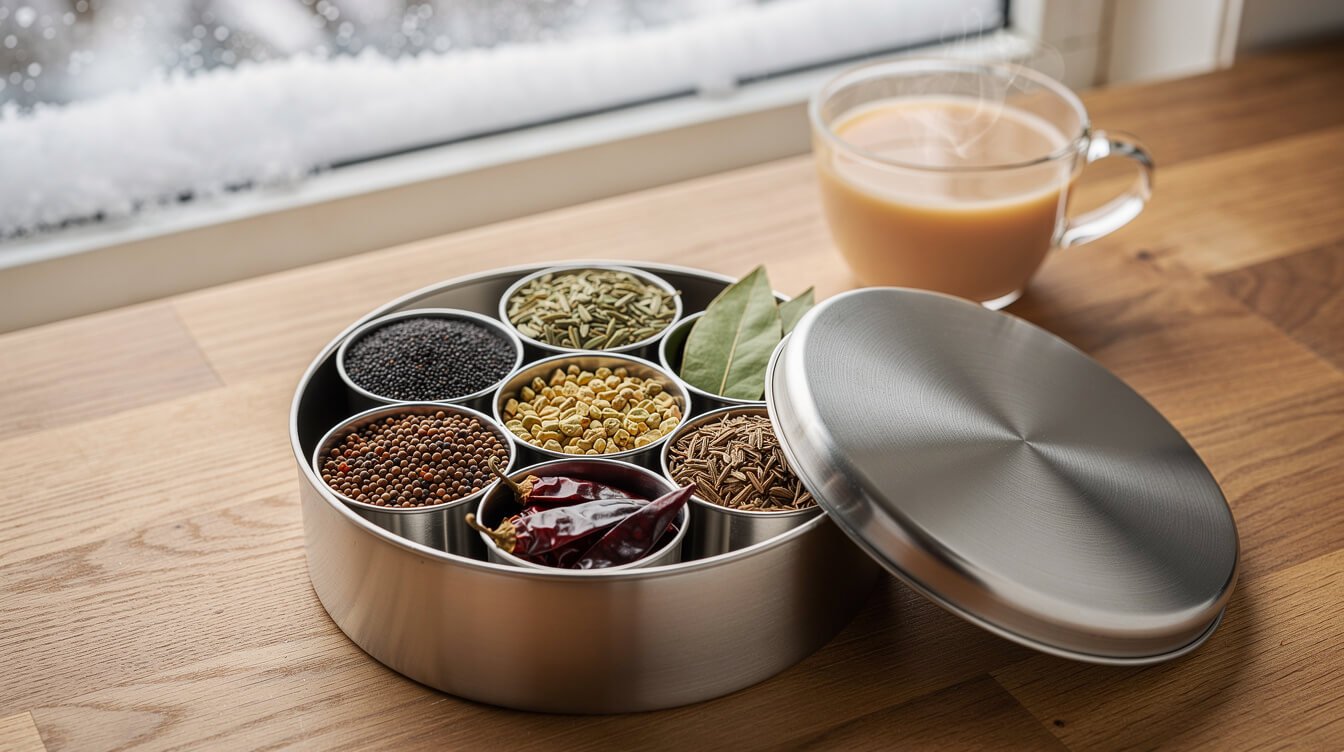
Keep it in an airtight container, away from the stove’s heat. Most Bangladeshi homes keep it in a round steel spice box (the kind with little cups inside and one lid over all of them), right next to the turmeric, chilli powder, and whole cumin. Making a small batch at a time keeps it fresh.
Buying it abroad
Most South Asian groceries carry it, and so do plenty of online spice shops. Look for any of these names on the bag, because spellings vary:
- Panch phoron, panch phoran, paanch phoron, or panch puran
- Bengali five spice or Indian five spice
- Pancha phutana (the Odia name)
Check that you can see five different whole seeds through the packet. If the shop is out, buy the five seeds separately and mix your own, since they are all common in desi groceries. If you cannot find radhuni, you do not need it: the standard five-seed blend is what most recipes mean.
Then make a pot of dal on a cold evening, let the phoron crackle, and drink your cha while it simmers. Our Golden Harvest Bengal Nabanna Mug, with its rice-harvest art, feels about right for that kind of night. For something sweet afterward, there is always mishti doi, or a whole tour of Bengali sweets.
Panch phoron FAQ
Is panch phoron the same as Chinese five-spice?
No. Panch phoron is five whole seeds (fenugreek, nigella, cumin, mustard, and fennel) used for tempering in Bengali and eastern South Asian cooking. Chinese five-spice is a ground powder of star anise, cloves, Chinese cinnamon, Sichuan pepper, and fennel. Only the fennel overlaps.
Is panch phoron spicy?
No. It contains no chilli. The heat in these dishes comes from the dried or green chillies cooked with it.
Do I need to toast panch phoron before using it?
No. The tempering is the toasting: you fry the whole seeds in hot oil or ghee for a few seconds until they crackle, then add the rest of the dish. Only a few recipes dry-roast and grind it.
How much panch phoron should I use?
For a family-sized pot of dal or vegetables, the Bangladeshi recipes we read call for about half a teaspoon to one teaspoon. Big festival batches use more. Bong Eats uses two teaspoons for a large labra.
What can I use instead of panch phoron?
The best substitute is a homemade mix of whichever of the five seeds you have. Some recipes, like the aamer tok dal above, say black mustard seeds alone will do in a pinch. Garam masala and Chinese five-spice are not substitutes.
Is panch phoron Bangladeshi or Indian?
Both, and more. It is used in Bangladesh, West Bengal, Odisha, Bihar, Assam, and Nepal. It is one of the many things Bengalis on both sides of the border share, along with the arguments about whose version is right.
Panch phoron is a small thing: one spoonful of seeds and thirty seconds in hot oil. But it is the sound and smell of a Bangladeshi kitchen, and once you know how to do it, you can make that smell wherever you live. Call your Ammu or your Nani and ask what goes in her tin. She will tell you the real ratio. For the rest of the winter table, read our guide to pitha, the rice cakes of Bengali winter.
Before you go
Get the next story by email
We write about Bangladeshi heritage and diaspora life every day. The best of it lands in one short weekly email.