Mishti Doi: Bengal’s Sweet Clay-Pot Yogurt, From Bogura to Your Kitchen
If a Bangladeshi guest has ever walked into your house holding a small clay pot wrapped in string, you already know what mishti doi is. It is the sweet, caramel-brown yogurt of Bengal, set in earthenware, thick enough to hold a spoon upright, and it shows up wherever there is good news. Your Ammu will pretend she doesn’t want any. Then she will hide the last pot at the back of the fridge.
This guide explains what mishti doi actually is, how it differs from the everyday sour yogurt on the dinner table, why the clay pot is not just for looks, and why one town in northern Bangladesh, Bogura, has a government certificate for its doi. Then we bring it home: when it gets served, how to make it in an American kitchen, and how to find it in Jackson Heights, Hamtramck, or Brick Lane.
What is mishti doi?
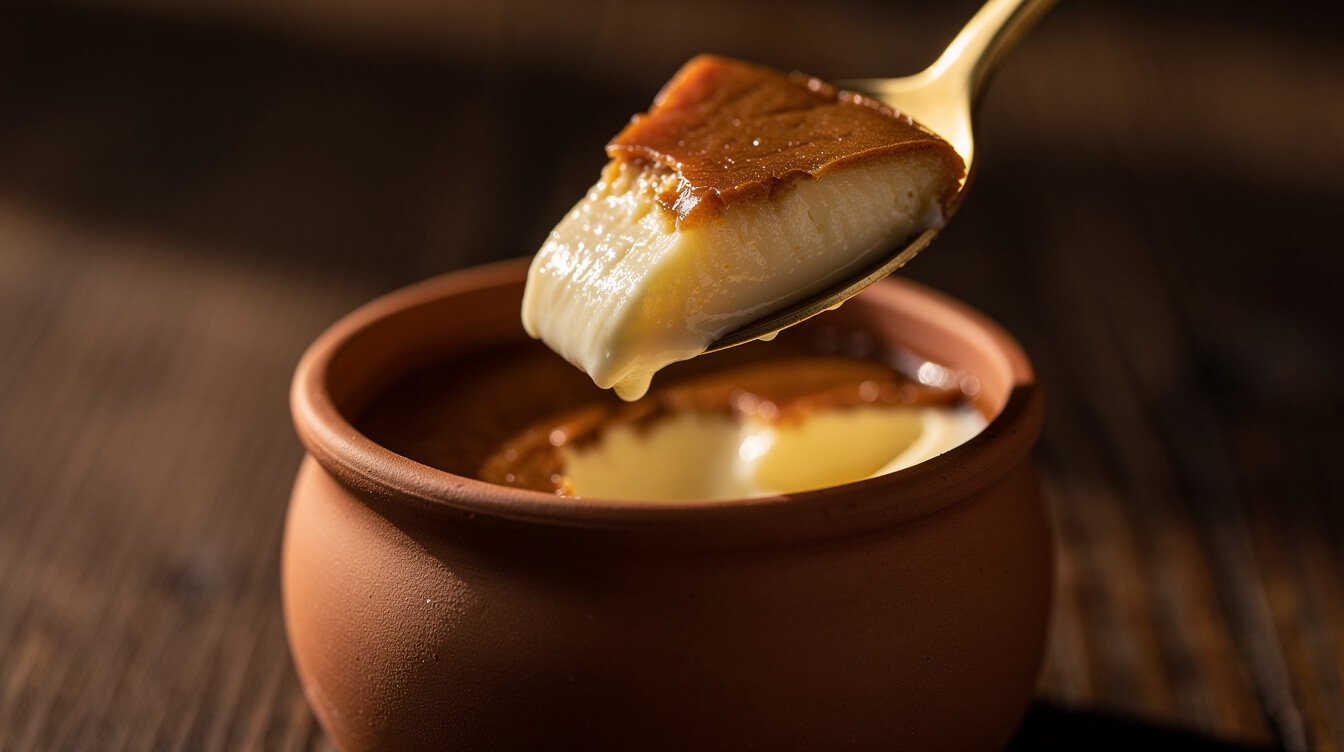
Mishti means sweet and doi means yogurt or curd, so mishti doi is, literally, sweet yogurt. That translation undersells it. Mishti doi is a fermented dessert made by boiling milk until it thickens, sweetening it with sugar, gur (jaggery), or khejur gur (date palm jaggery), and letting it set overnight in an unglazed clay pot. A small amount of yesterday’s doi goes in as the starter. Some cooks add a pinch of cardamom for fragrance. Wikipedia’s entry on mishti doi lists it as popular in Bangladesh and in the Indian states of West Bengal and Tripura, plus the Barak Valley of Assam.
What does mishti doi taste like?
Think of the deep, slightly toasty sweetness of caramel or brown sugar, a gentle tang underneath, and a texture somewhere between Greek yogurt and a set custard. The top often has a darker, glossy skin where the reduced milk browned. Good mishti doi is dense and smooth, never watery. It is sweet enough to count as dessert, but the fermentation keeps it from tasting like candy.
The color comes from the cooking. Milk that is boiled down for a long time browns gently, and when the sugar is caramelized first or when gur is used, the doi turns the color of milky tea. Plain white sweet yogurt exists too, but the caramel-brown version is the one most of us picture.
Doi, dahi, curd: the same family
Doi is the Bangla word for yogurt. In much of India and Pakistan it is dahi, and in South Asian English it is usually called “curd.” Anthropologist Ishita Dey notes in her Gastronomica study of Bogura’s doi that historical scholarship on Bengal (she cites Murshid, 2005) found doi eaten across religious and class lines. It was never a rich family’s food or a single community’s food. It belonged to everyone.
Mishti doi vs tok doi vs the yogurt in your fridge
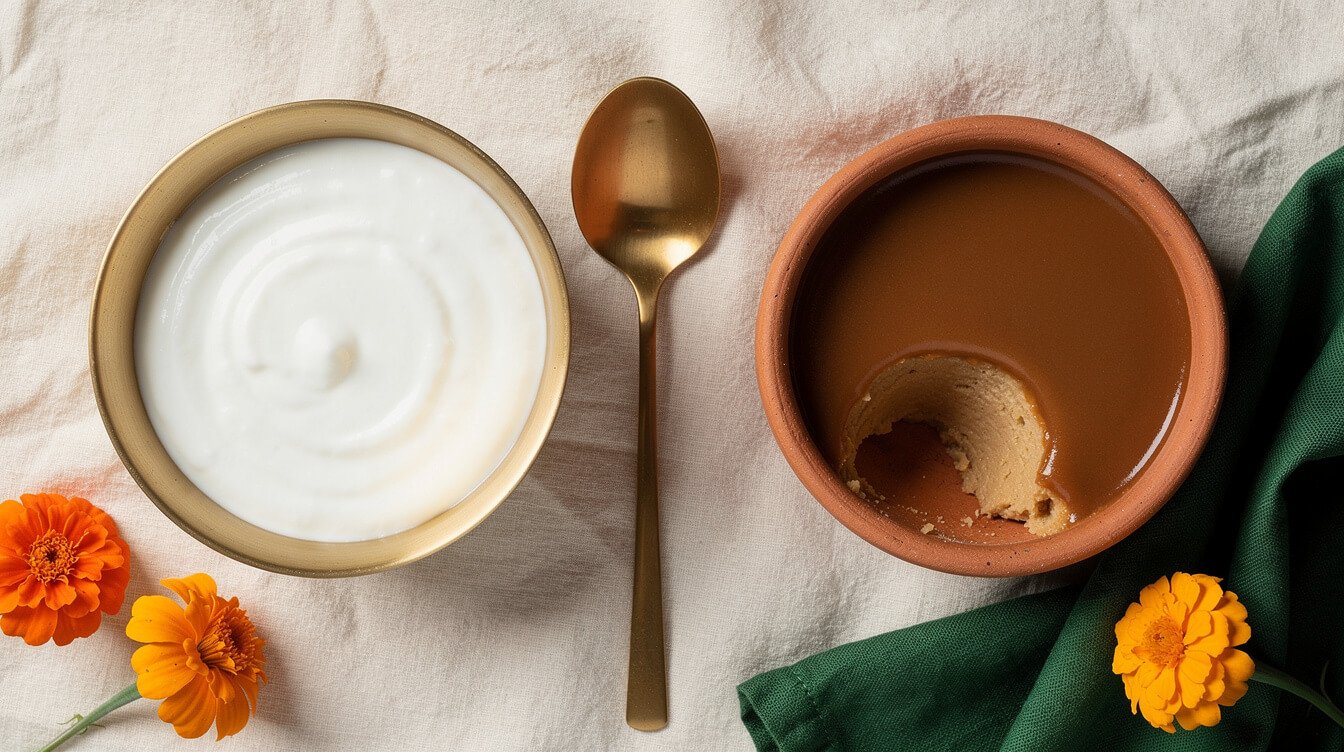
Every Bangladeshi kitchen has two kinds of doi, and confusing them at the table is a mistake you only make once.
- Tok doi (sour yogurt) is the everyday one. Tok means sour. It is plain, white, and tangy, and it lives in the cooking side of the kitchen. It goes into meat marinades, into borhani (the spiced yogurt drink served with biryani), and onto rice. Dey’s study notes doi eaten with rice, muri (puffed rice), and chira (flattened rice), and the old drink ghol, made from doi, water, salt, and sugar.
- Mishti doi is the dessert. It is made from milk that has been boiled down and sweetened before the starter goes in, so it sets thicker, sweeter, and browner. You eat it on its own, at the end of a meal, with a small spoon.
- Store yogurt in an American fridge is closest to tok doi. Greek yogurt is thicker, but it is strained after setting, not thickened by reducing the milk first. That difference matters, and it is why a spoonful of sugar stirred into Greek yogurt never quite tastes like mishti doi.
The difference in a single sentence: tok doi is cultured milk; mishti doi is cultured milk that was first cooked down, sweetened, and set slowly in clay.
Why mishti doi is set in a clay pot
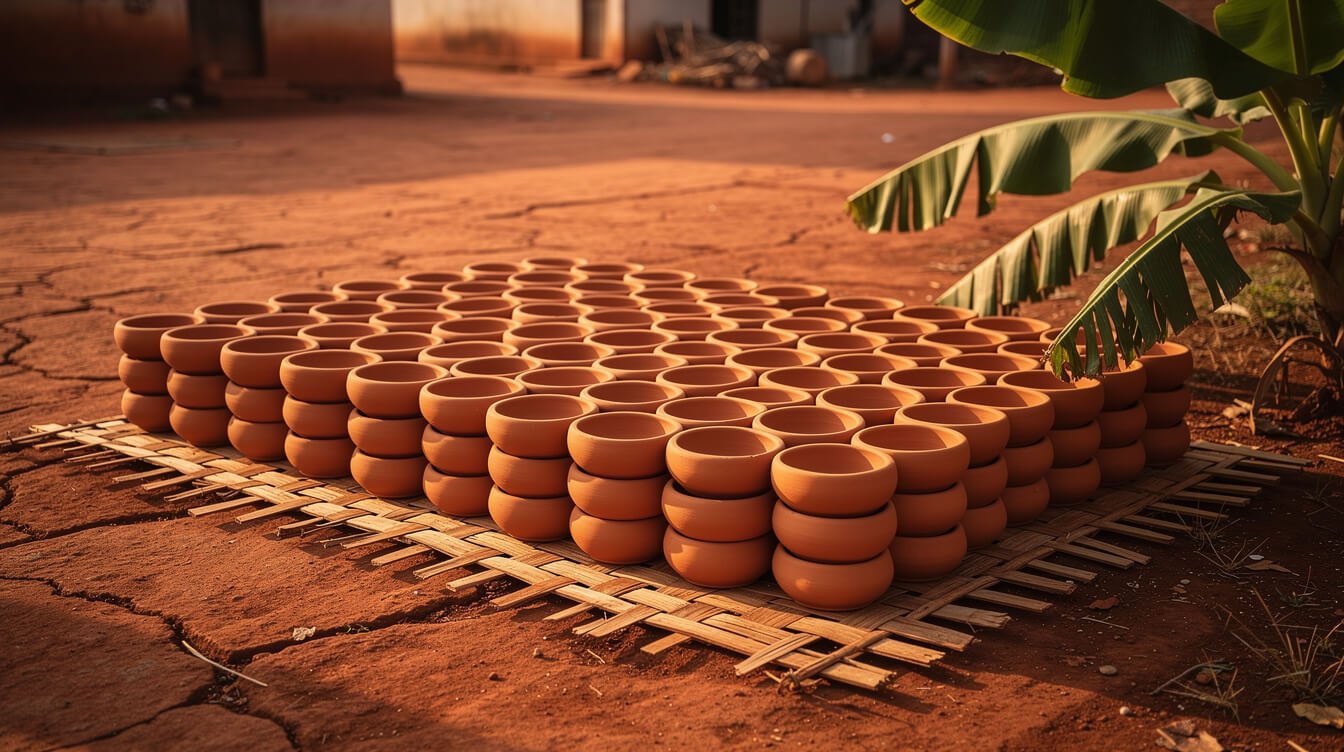
Ask any nani and she will tell you that doi sets in clay, never plastic. She is right, and there is a reason that goes beyond nostalgia.
Unglazed earthenware is porous. As the warm, sweetened milk sits in the pot, water slowly seeps into the clay walls and evaporates from the outside. That gradual evaporation thickens the yogurt as it sets, and the clay holds a steady, gentle warmth that the cultures need to grow. Both points appear in the Wikipedia entry, which cites food historian Michael Krondl’s Sweet Invention: A History of Dessert for the evaporation effect.
You can see this happen in the doi workshops of Bogura. Dey watched workers pour the sweetened milk and starter into flat-bottomed clay pots (she spells them sara) arranged in a ring around the ovens. “After two hours, half of the milk we have added will dry up,” one worker told her. “After all clay soaks up.” The workers lift the covers and top the pots up again, more than once, until the doi sets.
The pot is also the packaging
In Bangladesh, mishti doi is sold in the same pot it was set in. The pot keeps it cool, travels well, and tells everyone at the door what you brought. The industry around those pots is real: the Financial Express reported in 2025 that Bogura’s yogurt trade supports pot-making and even rope-making from dried paddy leaves.
Bogurar doi: the mishti doi town of Bangladesh
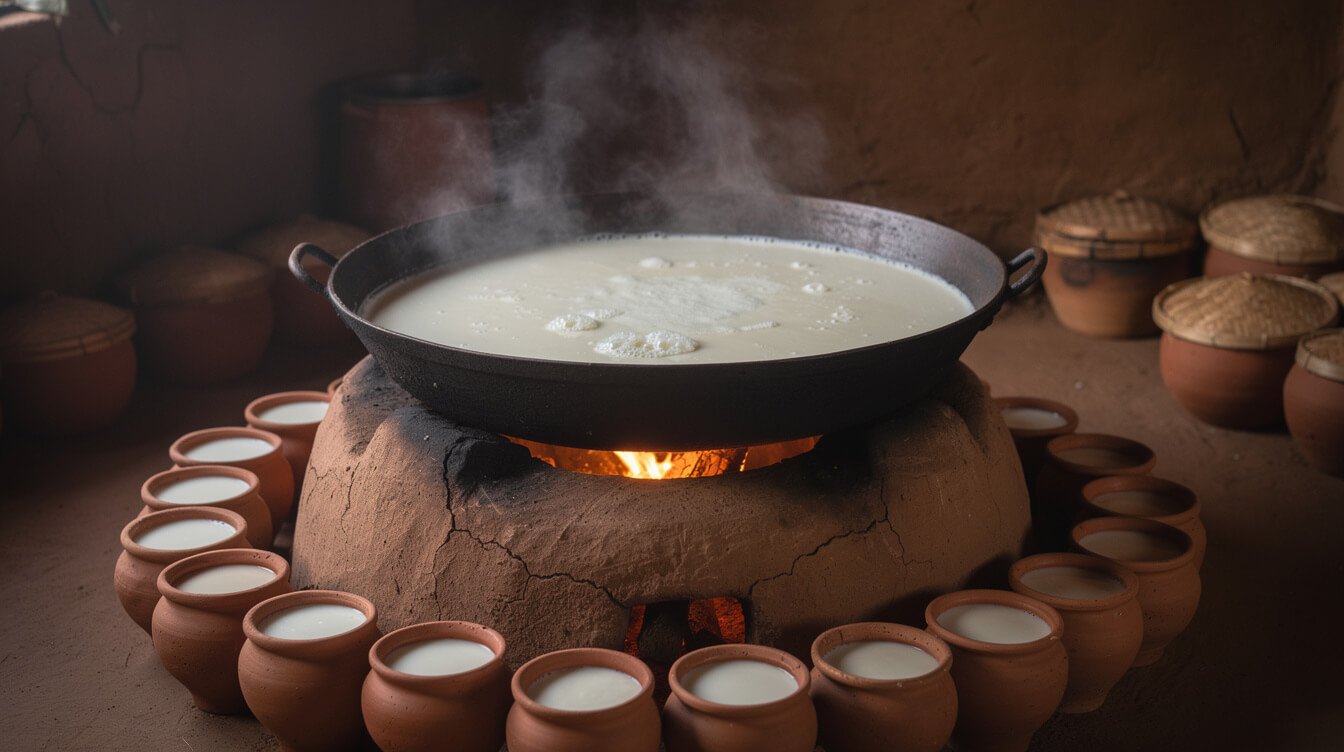
Say “doi” to someone from Bangladesh and the next word out of their mouth is usually “Bogura.” Bogurar doi simply means “Bogura’s doi,” and in June 2023 Bangladesh’s Department of Patents, Designs and Trademarks granted it a Geographical Indication (GI) certificate, as The Business Standard and The Daily Star both reported. That puts it in the same official club as Jamdani and Ilish.
Sherpur and the Ghosh legend
The heart of it is Sherpur upazila, about 24 kilometers from Bogura town. Local oral history credits the craft to two doi makers of Sherpur, Ghetu Ghosh and Nilkantha Ghosh. Ghosh was a common surname among the Goala community, who traditionally kept cattle and worked with milk, and Dey found that the doi makers she met in Sherpur today, from every background, still pointed her to the Ghosh neighborhood as the keepers of the original craft. Many hands, one doi.
How Bogura makes it
The method starts with milk and patience. Workers boil the milk in a huge wok, lifting it with a ladle and pouring it back from a height so the cream mixes back in instead of settling on top. Sugar is added by eye; “we don’t taste as we go along,” one worker told Dey. A little of yesterday’s doi, the beej or “seed,” goes in, because “without the seed no curd will set.” The clay pots are heated in the oven first to clean them, filled, then covered with woven bamboo lids so the heat spreads evenly. Dey’s sources put the whole job at 16 to 18 hours of labor.
The Wikipedia entry for Bogurar doi, citing Prothom Alo, gives a sense of the richness: about 2 kilograms of full-cream cow’s milk and 250 grams of sugar go into every kilogram of finished doi. Bogura doi makers will also tell you the real secret is the milk itself, from local cows that graze on local grass. If village dairy life is in your family story, the Traditional Bengali Village Life Bangladesh Mug puts the thatched hut, the cow in the yard, and the river boat on your morning cha.
Credit where it is due: the West Bengal doi towns
Bogura is not the only famous name. Across the border in West Bengal, Nabadwip is known for its lal doi (red doi), and Dey also names Mollarchowk, while Kolkata has its own sweet shop traditions. Mishti doi is a dessert of undivided Bengal, and both countries make it beautifully.
Letters from home
A little more desh in your inbox
One short email a week: the story behind a symbol, a festival, or a dish, plus new designs from the shop. No spam. Unsubscribe anytime.
When mishti doi shows up: guests, weddings, and Eid
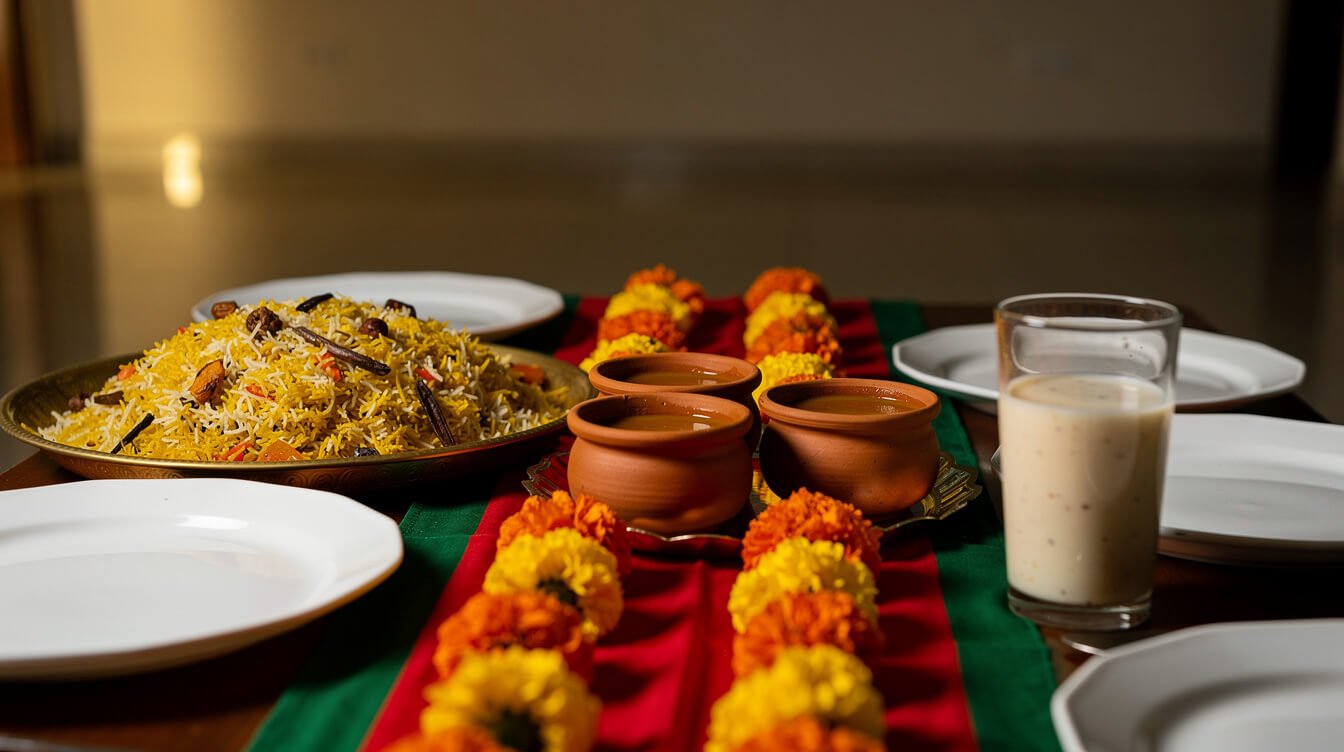
Mishti doi is less a dessert you decide to eat and more a dessert that arrives.
- With guests. In Bangladeshi homes, you do not visit empty-handed, and a pot of doi or a box of Bengali sweets is the classic thing to bring. A new job, a new baby, exam results, a relative back from abroad: good news travels with something sweet.
- After the biryani. At a wedding or a big dawat (a hosted meal), the savory courses are followed by dessert, and mishti doi sits alongside jorda and firni as one of the classic endings. Our kacchi biryani guide lists it right there with borhani. After a plate that heavy, a few spoonfuls of cool, sweet doi feel like a reset.
- At Eid. When The Business Standard covered Bogura’s GI status, producers said demand for the town’s doi doubles during festivals like Eid. Every family visit means another pot.
- At Pohela Boishakh. The Bengali New Year table is about sweets and fresh starts, and Saveur’s 2026 mishti doi recipe ran as part of a story on celebrating Bengali New Year in New York.
And on ordinary days? It is the end of a big Friday lunch, after the rice and fish and dal, when everyone is too full to move but somehow finds room for one small cup. If rice is the center of your family’s every meal, the Bhaat Is My Comfort Food Bangladeshi Rice T-Shirt says it for you. The doi is just what comes after.

Where the good milk comes from
The Traditional Bengali Village Life Bangladesh Mug wraps the whole village around your cup: the thatched hut, the cow in the yard, the boat at the river bend, and the paddy fields behind. For the cha that goes with your doi.
Making mishti doi at home in America

You don’t need a Bogura workshop. You need milk, a sweetener, a spoonful of good plain yogurt as the starter, and a warm place for the cultures to work. The hardest part in an American winter is the warmth.
A reliable diaspora version is Anikah Shaokat’s mishti doi recipe in Saveur. In outline, using her quantities:
- Cook 1 cup of jaggery (or coconut sugar) with 2 tablespoons of water into a quick caramel.
- Whisk in one 12-ounce can of evaporated milk and 2 cups of whole milk, with a pinch each of cardamom, cinnamon, and salt, and simmer until it reduces by half, to about 2 cups.
- Cool it to 110 to 115°F, then whisk in ⅔ cup of plain whole-milk Greek yogurt.
- Pour into terracotta cups or ramekins, cover with foil, and set in an oven with only the light on for 36 to 48 hours, until set but slightly jiggly.
- Chill for at least 2 hours.
Read her full recipe before you start; the method matters more than the list. A few notes from our side of the kitchen:
- Clay helps, but isn’t required. Small terracotta cups from a South Asian grocery or a garden store (unglazed, food-safe, washed and soaked first) get you closer to the real texture. Ceramic ramekins still work.
- The oven light is your village stove. In a cold New Jersey or Michigan kitchen, the oven with just the light on is the steady warm spot the cultures need. Patience is the ingredient you cannot skip.
- Winter is gur season. Khejur gur is a winter product in Bengal, the same date palm jaggery that makes winter pitha taste like home. Mishti doi sweetened with it has a darker, smokier sweetness.
- Taste the starter. Your doi will only be as good as the yogurt you seed it with. Use a plain, unflavored, whole-milk yogurt you like eating on its own.
Where to find mishti doi in the diaspora
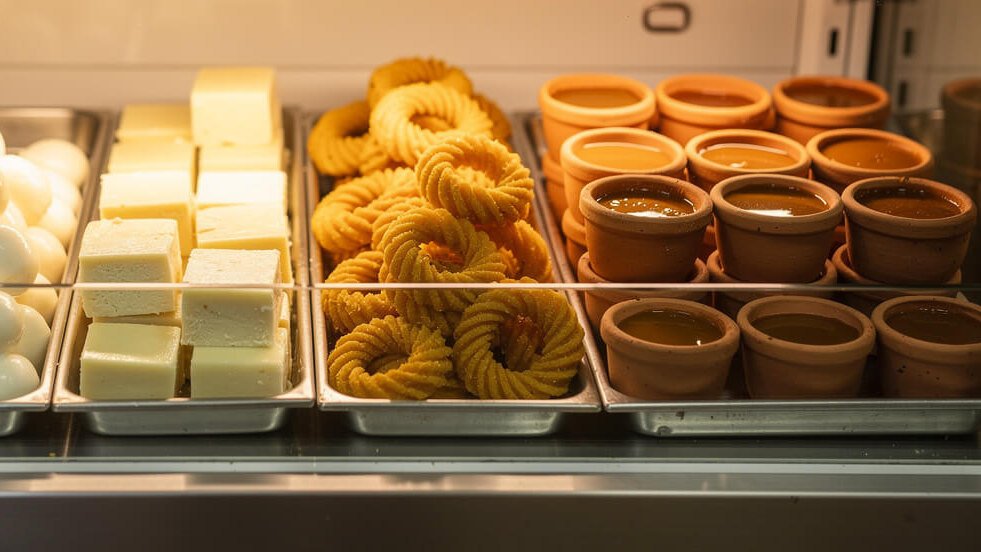
If you live near a Bangladeshi neighborhood, you are probably closer to a pot of mishti doi than you think. The Bangladeshi and Bengali sweet shops of Jackson Heights in Queens, Hamtramck outside Detroit, and Brick Lane in East London usually keep it in the refrigerated case, next to the roshogolla and the shondesh.
A few tips for buying it well:
- Look in the fridge, not on the counter. Mishti doi is a fresh dairy product. Shops sell it in small clay pots or in plastic tubs.
- Ask what it is sweetened with. In winter, some shops make a gur version. If they have it, try it.
- Ask if it’s made in-house. Many sweet shops set their own; others bring it in. Both can be good, but fresh is worth asking about.
- Bring a bag for the pot. Clay pots sweat when they come out of the cold.
Bogura’s doi itself travels too. Hasen Ali Alal, chairman of the long-running Bogura brand Akboria, told the Financial Express that demand since the GI listing has come from the Middle East, Europe, and North America, and that the company “once shipped nearly 40,000 earthen pots filled with yogurt to North America.” Somewhere in that shipment, somebody’s nani said the doi in America is never as good as home. She was probably right.
For the rest of what we eat, start with our guide to Bangladeshi food, and for why every visit comes with a gift, see Bangladeshi culture from inside the family.
Frequently asked questions about mishti doi
Is mishti doi the same as yogurt?
It is a yogurt, but a special one. The milk is boiled down and sweetened before the starter goes in, then it sets slowly in clay, so it comes out thicker, sweeter, and caramel-colored. Everyday plain yogurt in Bangladesh is called tok doi.
Is mishti doi Bangladeshi or Indian?
Both. Mishti doi comes from Bengal, which today is split between Bangladesh and the Indian state of West Bengal. Bogura is the most famous doi town in Bangladesh; Nabadwip is famous on the West Bengal side.
What is Bogurar doi?
The mishti doi of Bogura district in northern Bangladesh, centered on Sherpur upazila. It received a Geographical Indication certificate from Bangladesh’s Department of Patents, Designs and Trademarks in June 2023.
How long does mishti doi take to set?
Traditionally it sets overnight in a warm workshop. At home in a cooler kitchen it can take much longer; Saveur’s diaspora recipe allows 36 to 48 hours in an oven with the light on.
How long does mishti doi keep?
Keep it in the fridge. Saveur’s recipe says up to 4 days. For shop-bought pots, follow what the shop tells you.
Why is mishti doi brown?
Long-boiled milk browns gently, and many cooks caramelize the sugar or use gur, which deepens the color to the familiar milky-tea brown.
Mishti doi is a small pot carrying a lot: village milk, a craft passed down in Sherpur, a guest at the door with good news. Next time someone hands you one, untie the string slowly. Then hide it at the back of the fridge, like Ammu does.
Before you go
Get the next story by email
We write about Bangladeshi heritage and diaspora life every day. The best of it lands in one short weekly email.