Bengali People: Who We Are, From Dhaka to Kolkata to Queens
Ask ten aunties at a Jackson Heights dawat what “Bengali” means and you will get eleven answers, two arguments about fish, and a plate you did not ask for. So here is the straight version. Bengali people are the people of Bengal: the delta where the Padma, the Jamuna, and the Meghna run into the Bay of Bengal. They share one language, Bangla, and one long story. Today that story sits in two countries, Bangladesh and India, and in kitchens from Queens to East London to Dubai.
If you grew up between two countries, you have probably stood in front of a form and wondered which box is yours. Are you Bengali? Bangladeshi? Both? This guide answers that plainly. It covers who Bengali people are, where we live, what holds us together across borders and faiths, and the Bangladeshis who are not Bengali at all. Then it gets to the part you actually came for: what to write on the form.
Who are Bengali people?

Bengali people (in Bangla, Bangali) are an ethnolinguistic group. That is a long word for a simple idea: what makes you Bengali is the language you grew up hearing and the culture that came with it, not a passport. Bengali people come from the Bengal region of South Asia. Most of us speak Bangla, an Indo-Aryan language that took shape around 1,000 years ago and is written in the Bengali script.
The numbers are big. Wikipedia’s article on Bengalis puts the global population at about 300 million and calls Bengalis the third-largest ethnic group in the world, after the Han Chinese and Arabs. About two-thirds of Bengali speakers trace their roots to present-day Bangladesh. Most of the other third live in India.
Where the name comes from
The words Bangali (the people) and Bangla (the language and the land) both come from Bangalah, the Persian name for the region. That name probably goes back to Vanga, an ancient kingdom in the south of the delta. The oldest surviving Bengali literature is the Charyapada, a collection of Buddhist mystic songs. One of its poets, Bhusuku, calls himself “Bangali” in his song. So the word is at least 1,000 years old, older than most of the countries on today’s map.
What does that mean for you? When your nani says amra Bangali (“we are Bengali”), she is not naming a nationality. She means a people, a language, and a way of eating rice with your hand that no one outside the family will ever fully understand.
Bengali vs Bangladeshi: language, ethnicity, and passport

This is the question that fills Reddit threads, so let’s settle it. “Bengali” and “Bangladeshi” overlap a lot, but they are not the same word for the same thing. There are three separate ideas tangled together:
- Language: Bangla (English speakers often say “Bengali”). Spoken in Bangladesh and across eastern India.
- Ethnicity: Bengali. A people, defined by that language and culture, living on both sides of the border.
- Nationality: Bangladeshi. Citizenship of Bangladesh, the country. It includes everyone with that passport, Bengali or not.
So a family from Sylhet living in Queens is Bengali by ethnicity, Bangladeshi by origin, and American by passport. A family from Kolkata is Bengali by ethnicity and Indian by nationality. A Chakma family from Rangamati is Bangladeshi by nationality but not ethnically Bengali. All three are correct, and none of them cancels the others.
How the map got drawn
The short, factual version: in 1947 the partition of British India split Bengal in two. The western half became the Indian state of West Bengal, and the eastern half became East Pakistan, which became the independent country of Bangladesh in 1971. One people, one language, and since 1971, two countries. The name Bangladesh simply means “the country of Bangla” or “the land of the Bengalis.”
Bengalis make up about 98% of Bangladesh’s population, which is why so many people use the two words as if they were the same. Inside the family, nobody minds. On a form, or in a debate with your cousin from Kolkata, the difference matters.
Ghoti and Bangal: the family joke
Even inside Bengali identity there are old, friendly sub-labels. In West Bengal, families whose roots are in East Bengal (today’s Bangladesh) are called Bangal. Families rooted in West Bengal call themselves Ghoti. The rivalry is mostly about food and football: Bangals are said to swear by ilish (hilsa), Ghotis by chingri (prawns). If you are Bangladeshi, then in this joke you are a Bangal, and you probably already agree about the ilish.
Where Bengali people live today

Home is the delta, but the delta has two sides now, and the family group chat has members in every time zone.
In South Asia
- Bangladesh: home to most of the world’s Bengali people, from Dhaka and Chattogram (Chittagong) to Sylhet, Khulna, Rajshahi, and Barishal.
- West Bengal, India: Kolkata, Shantiniketan, and the districts along the Hooghly River. Bangla is the state’s official language.
- Tripura and Assam’s Barak Valley: Bangla is official in both. Many families there trace their roots to East Bengal.
- Beyond: the Andaman and Nicobar Islands, Jharkhand (where Bangla has been a second official language since 2011), and Bengali communities across India and Nepal.
In the diaspora
Bengali communities are found all over the world. Large populations live in Saudi Arabia, the UAE, and the rest of the Gulf, in Malaysia, and in Italy. The UK has one of the oldest communities: many British Bangladeshi families come from Sylhet, and East London’s Brick Lane is known as Banglatown.
In the US, New York City is the center of gravity. Jackson Heights has its stretch of 74th Street with sari shops and sweet shops, and Jamaica, Kensington, and Parkchester have their own Bangladeshi blocks. Paterson, New Jersey, has the second-largest Bangladeshi American community, with a “Little Bangladesh” along Union Avenue. In 2015 the community unveiled a Shohid Minar in Paterson’s West Side Park, modeled on the language martyrs’ monument in Dhaka. In Hamtramck, Michigan, there is a mural celebrating the Bengali language. If your parents moved you between Queens and the desh every other summer, this is your map.
That double life is exactly what our Bangladeshi American Two Countries One Heart T-Shirt is about: one heart, two addresses, and no need to pick between them.
What ties Bengali people together

Borders change. A few things have not. Ask a Bengali family in Dhaka and a Bengali family in Kolkata what makes them Bengali, and the lists will be almost the same.
Bangla, first and always
The language is the glue. Bangla is the sole official language of Bangladesh and one of India’s 22 scheduled languages. Bengalis take it personally: in 1999, UNESCO declared 21 February International Mother Language Day, in tribute to the Bengali Language Movement. We wrote more about how Bangla sits alongside Sylheti, Chittagonian, and the other languages of Bangladesh in our guide to Bangladeshi languages.
Bhaat, maach, and the rice cooker that never turns off
There is an old saying, maache bhaate Bangali: fish and rice make a Bengali. It is true on both sides of the border. Rice is the meal, and everything else (dal, bhorta, a fish curry with mustard or without) is there to go with it. If you want the full tour, start with our insider guide to Bangladeshi food.
The calendar and the six seasons
Bengalis share a calendar of 12 months grouped into six seasons, the choy ritu: grishmo (summer), borsha (monsoon), shorot (early autumn), hemonto (late autumn), sheet (winter), and boshonto (spring). Right now it is hemonto, the harvest season of new rice and Nabanna, the festival of the new grain. The year starts with Pohela Boishakh in mid-April, celebrated by Bengalis of every faith in both countries.
Adda, and the poets we argue about
Adda (long, aimless, sacred hangout talk) is a Bengali institution. Put three Bengalis and a pot of cha in a room and you have one. Half of that adda is about poets. Rabindranath Tagore won the Nobel Prize in Literature in 1913, and he wrote the songs that became the national anthems of both Bangladesh (Amar Shonar Bangla) and India (Jana Gana Mana). Kazi Nazrul Islam, Bangladesh’s national poet, was born in a village in West Bengal. One Bengal, two countries, the same poets on the shelf. If you want Tagore close by on cold days, our Rabindranath Tagore Ekla Cholo Re Bengali Poet Hoodie carries his most famous line: if no one answers your call, walk on alone.
Letters from home
A little more desh in your inbox
One short email a week: the story behind a symbol, a festival, or a dish, plus new designs from the shop. No spam. Unsubscribe anytime.
Many faiths, one language
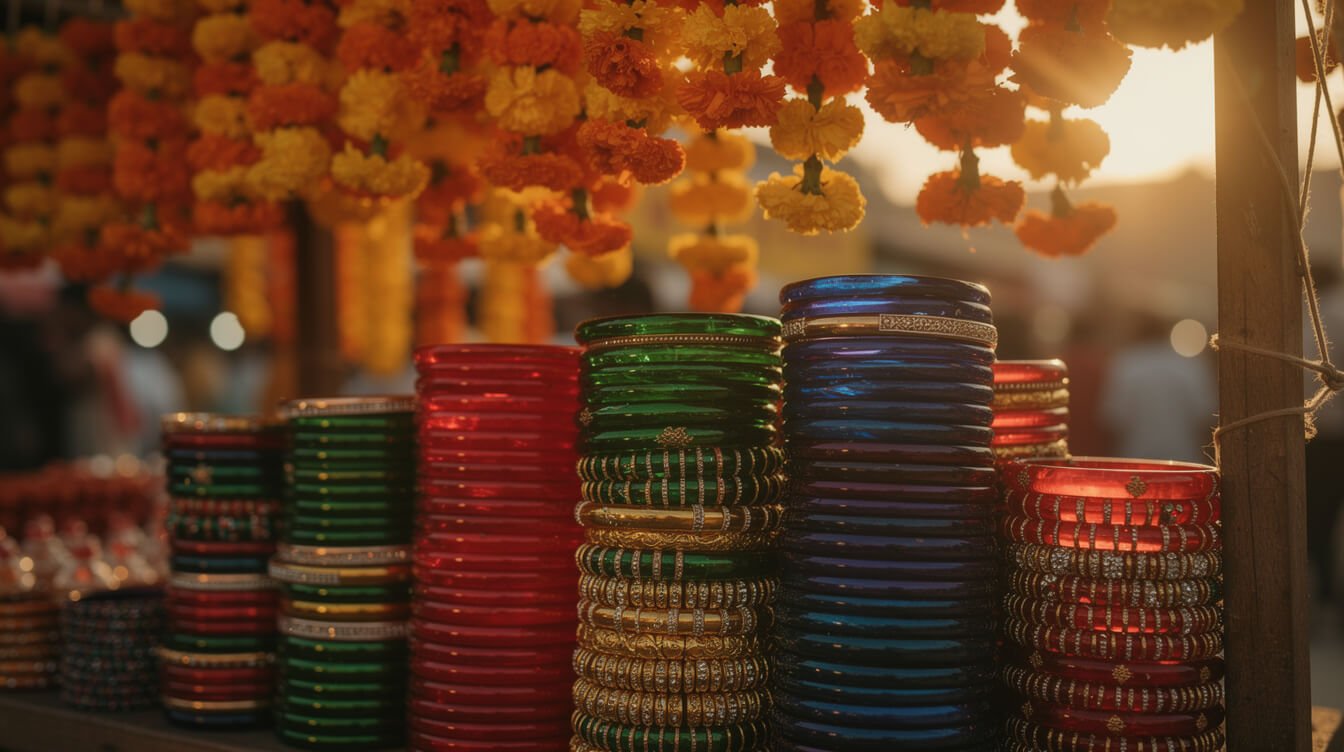
Bengali people do not share one religion, and never have. About 70% of Bengalis worldwide are Muslim, mostly in Bangladesh. Just under a third are Hindu, mostly in West Bengal, Tripura, and the Barak Valley, with a large Hindu community in Bangladesh too. There are Bengali Buddhists, many of them Barua families around Chattogram, and Bengali Christians. Many Christian communities date back centuries to the Portuguese era.
There is a Bengali saying for how busy that makes the calendar: baro mashe tero parbon, “thirteen festivals in twelve months.” A partial list:
- Eid al-Fitr and Eid al-Adha: new clothes, visits to every relative in the city, and a lot of shemai.
- Durga Puja: the biggest festival for Bengali Hindus. Durga Puja in Kolkata was added to UNESCO’s Intangible Cultural Heritage list in 2021.
- Buddha Purnima: marked by Bengali Buddhists with temple visits and lamps.
- Christmas: called Boro Din, “the big day,” in Bangla.
- Pohela Boishakh and Pohela Falgun: the new year and the first day of spring, celebrated by Bengalis of all faiths.
Growing up abroad, you may have friends from all of these. That is not a modern exception. It is how Bengal has always worked: different prayers and shared songs. The language belongs to everyone who speaks it. If you are new to all this, our guide to Bangladeshi culture covers the household side: shoes off at the door and the guest getting the biggest piece of fish.

Two countries, one heart
For every Bengali kid who grew up with one foot in the desh and one in America. A vintage-style tee for the life that holds both.
Bangladeshis who are not Bengali
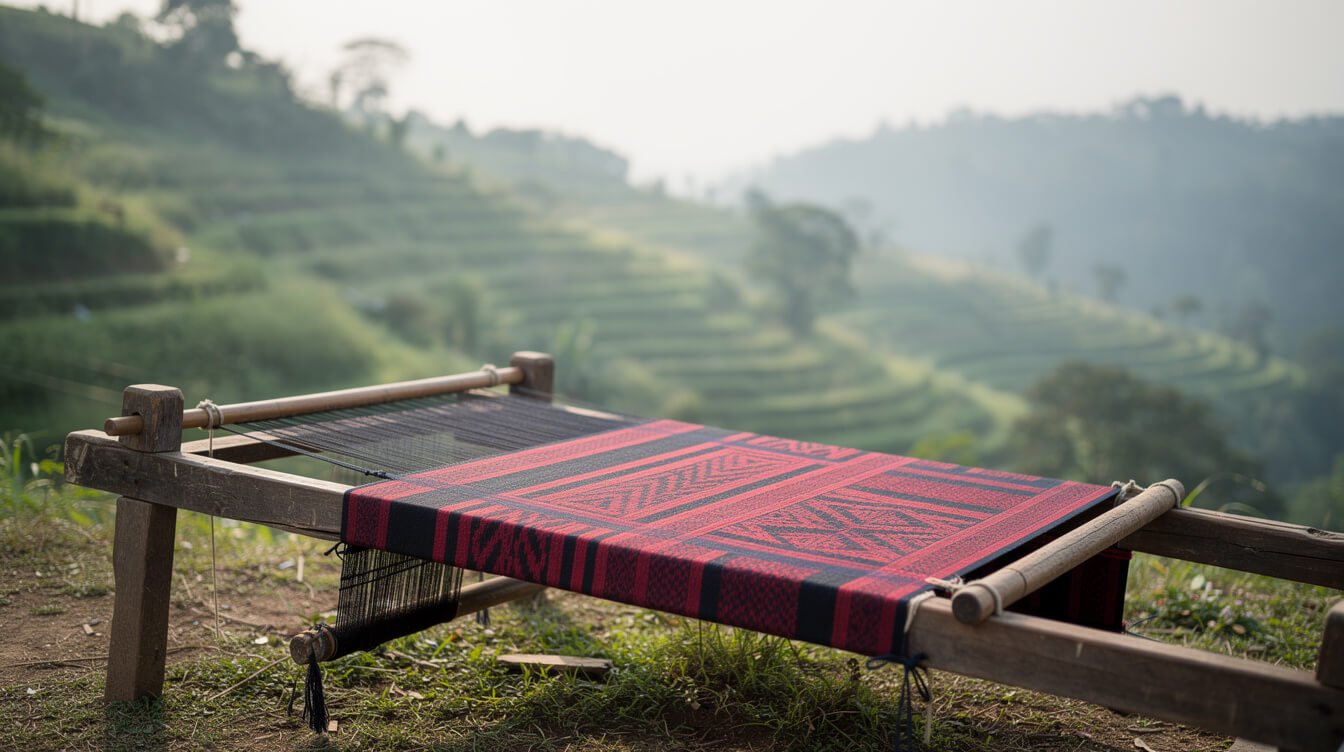
Here is the part most explainers skip. Bangladesh is mostly Bengali, but not only Bengali. Bangladesh’s 2022 census counted about 1.65 million people from Indigenous and other ethnic-minority communities, and Ethnologue lists 36 living Indigenous language communities in the country. They are Bangladeshi, full stop. Many speak Bangla as well as their own language, but their own identity comes first.
A few of the largest communities, with figures from the 2022 census:
- Chakma (about 483,000): the largest group, mostly in the Chittagong Hill Tracts around Rangamati. Most Chakma are Buddhist, and they have their own language and script.
- Marma (about 224,000): the second-largest group, also in the Hill Tracts, with roots in historic Arakan.
- Tripura, Mro, Tanchangya, and Bawm: other Hill Tracts communities, each with its own language and traditions.
- Santal and Oraon: in the northwest, around Dinajpur, Naogaon, and Thakurgaon.
- Garo: in greater Mymensingh. They call themselves Achik or Mande, and Garo society is matrilineal. Their harvest festival, Wangala, is known as the festival of the hundred drums.
- Khasi and Manipuri: in the Sylhet region, known for betel-leaf gardens and Manipuri dance and weaving.
Why does this matter in a post about Bengali people? Because “Bangladeshi” is a wider word than “Bengali,” and the people inside that difference deserve to be named, not footnoted. A Chakma kid in Queens and a Sylheti kid in Queens are both Bangladeshi Americans, and they both get to wear it.
So what do I put on the form? A diaspora FAQ
Am I Bengali or Bangladeshi?
If your family speaks Bangla (or Sylheti, or Chittagonian) and comes from Bangladesh, you are probably both: Bengali by ethnicity, Bangladeshi by origin. If your family is from Kolkata or Tripura, you are Bengali and Indian (or Indian American). If your family is Chakma, Marma, Garo, or from another Indigenous community in Bangladesh, you are Bangladeshi but may not be Bengali. Ask your parents how they describe themselves. That answer outranks any website, including this one.
What box do I check on the US census?
The US census race question has separate checkboxes for six Asian groups (Asian Indian, Chinese, Filipino, Japanese, Korean, and Vietnamese). Bangladeshi is not one of them. You check “Other Asian” and write in “Bangladeshi.” In the UK, the census has its own “Bangladeshi” tick box under Asian or Asian British. When a US survey asks which language you speak at home, the answer is “Bengali” (or “Bangla”). That is how the community gets counted twice: by origin and by language.
Is Bengali a race?
No. Bengali is an ethnicity and a language, not a race. Bengalis have diverse ancestry, which is what you would expect from a delta that has been a crossroads of trade, migration, and kingdoms for more than 2,000 years. Ignore any online post that tries to turn that into a ranking.
What is the difference between Bangla and Bengali?
Nothing, except who is saying it. Bangla is the name of the language in the language itself. “Bengali” is the older English name. Both are correct. Many Bangladeshis prefer “Bangla.”
Are Bengalis from India and Bangladesh the same people?
Same language, same poets, same six seasons, same arguments about fish. They are different countries with different histories since 1947, and different accents and dialects. Most Bengalis on both sides happily say both things are true.
Do all Bangladeshis speak Bangla?
Almost all, since it is the national language, and about 98% of Bangladeshis speak it as their first language. Indigenous communities often speak their own languages at home, and many Sylheti and Chittagonian families speak a regional variety that sounds very different from standard Bangla. Ask a Sylheti nani to slow down and you will see.
The short answer for your cousin
Bengali people are a people, not a passport. We are the Bangla speakers of the Bengal delta, about 300 million of us, split between Bangladesh and India and scattered from Brick Lane to Paterson to Hamtramck. Bangladeshi is a nationality. It includes most Bengalis, and it also includes the Chakma, Marma, Santal, Garo, and other communities whose roots are just as deep.
So the next time a form or a friend asks what you are, you can give the full answer: Bengali by language and culture, Bangladeshi by family, and whatever your passport says. All of it is true at once. Wear your roots.
Want to keep going? Start with the national flower in what does Shapla mean, or read the story of the Bangladesh flag.
Before you go
Get the next story by email
We write about Bangladeshi heritage and diaspora life every day. The best of it lands in one short weekly email.