Bengali Wedding Traditions: Every Ritual From Gaye Holud to Bou Bhaat, Explained
The first wedding card arrives in late October. By December there are five of them on the fridge, your Ammu has already decided what everyone is wearing to each one, and the family group chat has a new subject line: biye (wedding). A Bengali wedding is not a day. It is a season of events, each with its own name, its own food, its own colour, and its own set of cousins running the show.
If you grew up Bangladeshi abroad, you probably know the outline and not the names. If you’re marrying into a Bengali family, or you’ve just been invited to your first holud, you may know neither. This guide walks through every part of a Bengali wedding in order: the matchmaking and the paan-chini, the turmeric day, the gate and the shoes, the nikah, the Hindu rituals our neighbours across the border share with us, the bou bhaat, and what changes when the whole thing moves to Queens, Hamtramck, or East London.
What a Bengali wedding actually is

Start with the idea underneath it. In a Bengali wedding, two people marry and two families join. A 2014 Daily Star wedding journal by the designer Maheen Khan puts it plainly: marriage is “the alliance of two families and extended relations as well.” That is why the guest list includes your father’s colleague’s brother, and why every event has a “bride’s side” and a “groom’s side” keeping friendly score.
Bengali is a language and a culture, not a religion, so there is no single Bengali wedding ceremony. In Bangladesh most weddings are Muslim, with the legal marriage done through a nikah. Bengali Hindu families, in Bangladesh and in West Bengal, India, marry with Vedic rites. Around both cores sits a shared layer of Bengali custom: the turmeric, the sweets, the fish, the songs, the pranks, and the reception thrown by the groom’s family. Wikipedia’s article on gaye holud notes that the turmeric ceremony is “widely observed among both Bengali Muslims and Hindus.” That shared layer is what most people mean when they say “Bengali wedding.”
Timing matters too. In Bangladesh’s cities, winter is wedding season. The Daily Star has called December the start of “the long awaited wedding season in Dhaka,” the month of fog, shawls, and invitation cards stacked on the table. The cool, dry months make long outdoor evenings bearable, and diaspora families plan trips home around them.
The events, in order
Every family edits the list, but a full Bangladeshi wedding usually runs something like this:
- Matchmaking and the family visit (ghotok, paka kotha)
- Engagement (paan-chini)
- Last meals as a single person (ai buro bhaat)
- Turmeric day (gaye holud), often with a separate mehendi night
- The wedding itself (biye), with the nikah or the Hindu rites
- The farewell and the welcome (bidai, bodhu boron)
- The groom’s family’s reception (bou bhaat)
Some families squeeze it into a long weekend. Some stretch it over two weeks. Nobody, ever, does fewer than three events.
Before the Bengali wedding: ghotok, paka kotha, and paan-chini

For generations, a Bengali wedding started with a ghotok, the matchmaker. He knew which families had a son finishing his degree and which had a daughter the right age, and he carried the details back and forth: education, jobs, family history, who was related to whom. The Daily Star’s 2014 journal describes the ghotok as a paid professional who also smoothed over misunderstandings between the two sides. By 2015 the same paper was reporting that ghotoks were “quite out of business” because matrimony websites had taken over. Today the ghotok is as likely to be an aunt with a WhatsApp group, a mutual friend, or the couple themselves.
Once two families are interested, the groom’s side visits the bride’s home. This is the paka kotha, literally the “ripe talk” or firm word, where the families size each other up over tea and a very carefully arranged plate of snacks. In older generations the couple might not meet at all until the wedding day. Now they usually have, often many times, and the visit is about the parents.
Paan-chini: the engagement
The formal engagement is often called paan-chini, after the paan (betel leaf) that is served to guests at any auspicious event in Bangladesh. The Daily Star’s journal notes that paan wrapped in silver foil signals festivity, and that sweets always come along. Rings may be exchanged and a date may be set, and from here on the two families are planning together.
Ai buro bhaat: the last single meals
Ai buro bhaat is the feast for the bride or groom before the wedding. It’s a last meal of rice as an unmarried person, cooked by family or by relatives who invite them over. Expect rice, fish, luchi, vegetables, and sweets like payesh. In Bengali Hindu households, Wikipedia’s article on the custom describes a lovely detail: the bride or groom takes a bite of the fish head and passes it to a sibling, a wish that the sibling will marry next. Some families hold several of these, which is the closest thing a Bengali wedding has to a bachelor party.
Gaye holud: the turmeric day of a Bengali wedding

Gaye holud means “turmeric on the body,” and it is the part of a Bengali wedding everyone remembers. The bride (and, at a separate event, the groom) sits on a decorated seat in yellow or orange, and guests come up one by one to touch a little turmeric paste to her face and hands, then feed her a bite of something sweet. There is music, dancing, and a lot of yellow. The couple is not married at the end of it. Wikipedia’s article is clear that no legal marriage happens at the holud. It is the party before the promise.
The turmeric traditionally comes from the groom’s home, carried to the bride’s house with gift trays called tattwa: saris, cosmetics, sweets, and fish, all decorated with competitive care. The Daily Star’s journal describes a Bangladeshi custom that delights every first-time guest: the groom’s family sends a pair of ruhi (rohu) fish to the bride’s home on the morning of the holud, sometimes dressed up as a bride and groom in a tiny sari and lungi. Fish, the article explains, stand for fertility, good fortune, and plenty. The tattwa is not dowry. Its point is the artistry of the presentation, and each side tries hard to out-decorate the other.
What happens at a holud
- The seat and the paste. The bride sits on a low stage, and guests take turns touching turmeric to her forehead, cheeks, and hands.
- The feeding. Guests feed her a bite each, often pitha and other sweets. By the end she has eaten forty bites of forty different things.
- The songs. In villages, women sing meyeli git, folk songs that women compose and pass down, full of teasing between the two families. In cities, cousins perform dance routines they’ve rehearsed for weeks.
- The menu. The Daily Star’s 2015 “Weddings: Then and Now” lists pitha, fuchka, and jilapi as holud favourites.
The village holud
The city holud has fairy lights and a stage. The village holud, as The Daily Star described in 2025, happens at home, often in summer, which rural families consider auspicious. It starts before dawn with a huge pot of kheer (rice pudding) sent around the neighbourhood. The bride sits on a low wooden piri in a yellow sari, everyone smears everyone with wild turmeric and coloured powder, and elders bathe her in milk and water with mango leaves and bless her with rice and durba grass. Then the young people start pushing each other into the mud. They call it kada khela, the mud game.
Mehendi night
Many Bangladeshi families now add a separate mehendi (henna) night, where the bride’s hands and feet are painted in fine patterns and her friends get henna too. The popular belief, as the Daily Star’s journal puts it, is that the deeper the henna’s colour, the stronger the groom’s love. There is also a practical bonus. Tradition says a new bride does no housework at her in-laws’ home until her henna fades.
The biye: gate dhora, the nikah, and juta churi

The wedding day itself is the biye. In a Bangladeshi Muslim wedding it centres on the nikah (also called the akd), and around it sit the customs every Bengali kid looks forward to all year.
The groom arrives: bor jatri and gate dhora
The groom’s procession, the bor jatri, used to arrive on horses, elephants, or in horse-drawn carriages, depending on the family’s means. Now it comes in a line of cars, the groom’s covered in flowers. He often wears a turban and sometimes a sehra, a veil of flowers. And then he hits the gate.
Gate dhora means “holding the gate.” The bride’s younger siblings and cousins block the entrance and refuse to let the groom in until he pays. The Daily Star’s 2015 piece “The Big Fat Bengali Bibaho” describes it perfectly: the cousins wait “until they receive a good amount of money from the dulabhai” (the brother-in-law). The negotiation is loud, theatrical, and fought over in crisp new notes. Everybody knows the groom will pay. The fun is in how long it takes.
The nikah and the kabin
The nikah is the legal and religious marriage. A kazi (marriage registrar) conducts it in front of close family witnesses. The bride and groom are each asked whether they accept the marriage, and each answers “qobul” (I accept). Then they sign the marriage contract, the kabin-nama.
The contract names the denmohor, or mohr: a sum the groom gives to the bride. Banglapedia’s article on marriage calls denmohor “a special right of wives” under Muslim law. People often mix it up with dowry, which runs the other way. Mohr goes from the groom to the bride and is hers. Many urban families now do the akd quietly at home before the big party. The Daily Star noted this shift back in 2015, when the big event in front of hundreds of guests was turning into a reception.
The mirror, the shoes, and the food
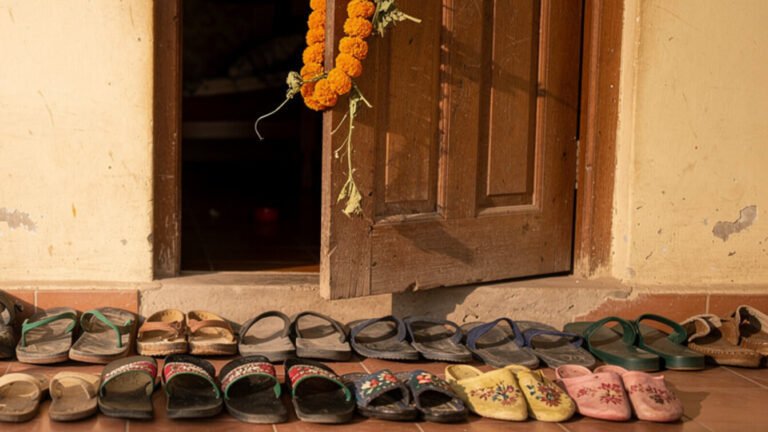
After the nikah, the couple sit together on the stage. In the rusmat ritual, a veil is placed over both of them and a mirror is held up, and the groom is asked what he sees. The answer is supposed to make the aunties sigh. Meanwhile, the bride’s cousins have been watching the groom’s feet. When he takes off his shoes to step up onto the stage, they steal them. This is juta churi, shoe-stealing, and the shoes come back only after another round of negotiation. A 2015 Daily Star piece already called it a ritual that was “dying out,” but every 90s kid remembers being on shoe duty.
Then comes the food, which is the part your uncles will review on the drive home. The Daily Star’s list of wedding favourites has barely changed in a generation: kacchi biryani, chicken roast, borhani (spiced yogurt drink), and firni or jorda (sweet saffron rice) for dessert, with paan at the door on the way out.
Shopping for the couple, or for the cousin who will spend the whole biye making eyes across the room? The Tumi Amar Sukher Osukh Bangla Typography T-Shirt carries a very Bengali kind of love line: tumi amar sukher osukh, roughly “you are the sweet ache of my happiness.”
Bidai: the farewell
The night ends with bidai, the bride’s farewell to her parents’ home. It is the most emotional moment of a Bengali wedding. The Daily Star’s journal calls it “joyous for the boy’s side and melancholic for the girl’s family.” Even the cousins who spent the evening extorting the groom go quiet. Have tissues ready.
Letters from home
A little more desh in your inbox
One short email a week: the story behind a symbol, a festival, or a dish, plus new designs from the shop. No spam. Unsubscribe anytime.
A Bengali Hindu wedding: topor, shubho drishti, and sindoor

Bengali Hindu families in Bangladesh and West Bengal marry with rites that are centuries old, and much of the look people picture when they search “Bengali wedding” comes from them: the betel leaves, the red sindoor, and the groom’s tall white hat. Banglapedia lists the core rites as shubho drishti, the exchange of garlands, mantras, the sacred fire, kanyadan (giving away the bride), and the seven steps. The date itself is usually chosen from the panjika, the almanac.
The topor and the mukut
The groom wears a topor, a tall, conical, white headpiece made of sholapith, a light, carved plant pith. Wikipedia notes that the topor is traditionally a gift from the bride’s family and is worn for good luck. The bride wears a related crown called a mukut. Both are delicate enough that someone is always assigned to guard them.
Saat paak and shubho drishti
In saat paak (seven turns), the bride sits on a low wooden seat, the pidi, and her brothers lift her and carry her around the groom seven times. She holds two betel leaves over her face the whole way. Then comes shubho drishti, the “auspicious look”: she lowers the leaves and the couple look at each other. It is the most photographed moment of a Bengali Hindu wedding, and it comes from a time when that look really was the first.
Mala badal, khoi, and sindoor
The couple exchange flower garlands (mala badal), a sign that they accept each other. Later, the bride’s brother puts khoi (puffed rice) in her hands, and the couple offer it to the sacred fire together. The ceremony closes with sindoor daan. The groom applies red vermilion to the parting of the bride’s hair, traditionally using a konke, a small rice-measuring pot, and covers her head with a new sari from his family. From then on, sindoor and the white and red shakha-pola bangles mark her as married.
If you’re Bangladeshi Muslim, many of these will feel familiar in spirit even if not in form. The holud, the fish, the in-laws’ welcome, and the bou bhaat are shared. That’s the honest picture of one Bengal across two countries and several faiths, and it runs all through our guide to Bangladeshi culture.

For the couple who says it in Bangla
The Tumi Amar Sukher Osukh T-Shirt sets a Bengali love line, “you are the sweet ache of my happiness,” in big, rounded, retro Bangla lettering in cream. Wear it to the mehendi, or give it to the newlyweds who still text each other in Banglish.
After the wedding: bodhu boron, breakfast, and bou bhaat

The bride arrives at her new home, and the second half of the Bengali wedding begins. The groom’s family is now the host.
Bodhu boron: welcoming the bride
Bodhu boron is the welcome at the door, led by the groom’s mother. Families do it differently. In Muslim homes it may be simple prayers and a plate of sweets. In some homes, and in the Hindu tradition, the bride steps into a plate of milk and red alta (lac dye) and then onto a white cloth, so her first steps into the house leave red footprints. Hindu families connect those footprints to the goddess Lakshmi and the prosperity she brings. Some families add rice and grass for a good harvest. Others light an oil lamp.
Bashor ghor and the morning after
The couple’s room, the bashor ghor, is decorated with strings of fresh flowers hung around the bed. The next morning, many Bangladeshi families keep a tradition the Daily Star’s journal calls shokaler nashta. The bride’s family sends breakfast to the groom’s home, and it is never just breakfast: parathas, kebabs, curries, pitha, sweets, and fruit, arranged to impress.
Bou bhaat: the bride’s feast
Bou bhaat means “bride’s rice” or the bride’s feast. It’s the reception the groom’s family hosts, usually a day or two after the wedding, to introduce the new bride to their relatives, friends, and neighbours. The bride’s family come as guests of honour. In older times, as Banglapedia and the Daily Star both note, the bride herself cooked or served food for her in-laws. Today she sits on a stage in a new sari, a gift from her father or her in-laws, while guests bring presents and the caterer brings out the second round of kacchi.
Customs after the bou bhaat vary by region. Wikipedia notes that in eastern Comilla, the couple’s first return visit to the bride’s family, the firani, happens after eight days and is called at naiyor. Ask any Bangladeshi family about their district’s version and settle in. It will be a long answer.
The diaspora Bengali wedding: what changes and what never does

Move the whole thing to New Jersey or East London and the bones stay the same. The venue changes. The holud happens in a rented banquet hall or a finished basement instead of a courtyard. The cousins’ dance practice happens over video call across three time zones. The gate is the door of a hotel ballroom, and the groom pays in dollars or pounds, which the cousins consider a promotion.
Some changes started back home. The Daily Star noticed as early as 2015 that families were merging the bride’s and groom’s holuds into one joint event, “double the fun at half the expenses,” and that the akd was moving to a quiet ceremony at home. Diaspora families have taken both ideas and run with them, because renting one hall is cheaper than renting two. If your family has ever planned a wedding with a spreadsheet and a prayer, the Shanti Amar Budgeter Baire Bangla Typography Hoodie (“peace is beyond my budget”) will make the father of the bride laugh, eventually.
Other things never change, wherever you are:
- The guest list grows on its own. Your parents will invite someone you have never met. That person will tell you how big you have grown.
- Yellow means holud. If you’re a guest at a holud, wear yellow, orange, or red unless the invitation sets a different theme. (The Daily Star spotted holuds going turquoise back in 2015. Just ask.)
- The food is the review. Nobody remembers the centrepieces. Everybody remembers whether the kacchi had enough potatoes.
- December is still the season. Many families fly home to Dhaka, Sylhet, or Chattogram (Chittagong) for winter weddings. It’s the one time of year when the cousins from four countries all end up on the same rooftop.
For a lot of second-generation kids, the wedding is where Bengali culture is loudest and easiest to love. You learn the songs because you need them for the holud. You learn the kinship words because you have to greet forty relatives by the right title. You learn the food because you’re on the sweets committee and someone needs to know the difference between chomchom and kalojam. (Our guide to Bengali sweets can help.)
Bengali wedding FAQ
How many days does a Bengali wedding last?
Usually three main events over a few days to two weeks: the gaye holud, the biye (wedding), and the bou bhaat (the groom’s family’s reception). Many families add a paan-chini (engagement), a mehendi night, and one or more ai buro bhaat dinners.
What does gaye holud mean?
Gaye holud means “turmeric on the body.” It’s the pre-wedding ceremony where family and friends apply turmeric paste to the bride or groom and feed them sweets. It’s observed by Bengali Muslims and Hindus in Bangladesh, West Bengal, and the diaspora. The couple is not legally married at the holud.
What is the difference between a nikah and a biye?
The nikah (or akd) is the Muslim marriage contract itself: consent, the kabin-nama, and the signatures, conducted by a kazi. Biye is the Bengali word for wedding, and it covers the whole celebration. Many families now hold the nikah at home before the big reception.
Is mohr (denmohor) the same as dowry?
No. Mohr is paid by the groom to the bride and belongs to her. Banglapedia calls it “a special right of wives” under Muslim law. Dowry runs in the opposite direction, and Banglapedia calls it a widespread social malady.
What should I wear to a Bengali wedding as a guest?
For a holud: yellow, orange, or red, unless the invitation says otherwise. For the wedding and bou bhaat: your dressiest outfit. Women often wear saris, salwar kameez, or lehengas, and men wear a panjabi (long tunic) or a suit. If in doubt, ask the family. They’ll be thrilled you asked.
What is juta churi?
Juta churi means shoe-stealing. The bride’s cousins hide the groom’s shoes during the wedding and return them only after he pays. It goes together with gate dhora, when the same cousins block the venue entrance until the groom pays to get in.
Do Bengali Muslim and Hindu weddings share traditions?
Yes, many. The gaye holud, the fish and sweets sent between families, the welcome at the in-laws’ door, and the bou bhaat appear in both. The religious core is different: a nikah for Muslim couples, and Vedic rites such as saat paak, shubho drishti, and sindoor daan for Hindu couples.
Final thoughts: the wedding is the family
Strip a Bengali wedding down and you find the same thing at every stage: two families learning to feed each other. The groom’s side sends fish and turmeric. The bride’s side sends breakfast. The cousins take money at the gate and give back the shoes. The new bride is welcomed at the door with milk and red footprints, and the whole thing ends with one family throwing the other a feast.
If you’re planning one, keep the rituals that mean something to your family and let the rest go. If you’re a guest, wear yellow to the holud, pay the cousins, and eat the kacchi. If you’re a second-generation kid who never learned what any of it was called, now you know. Call your nani and ask what her holud was like. She has been waiting for someone to ask.
Before you go
Get the next story by email
We write about Bangladeshi heritage and diaspora life every day. The best of it lands in one short weekly email.